From Noah to Babel
Genesis 9–11 · Connecting Stories · Narrated by Jon
A new beginning
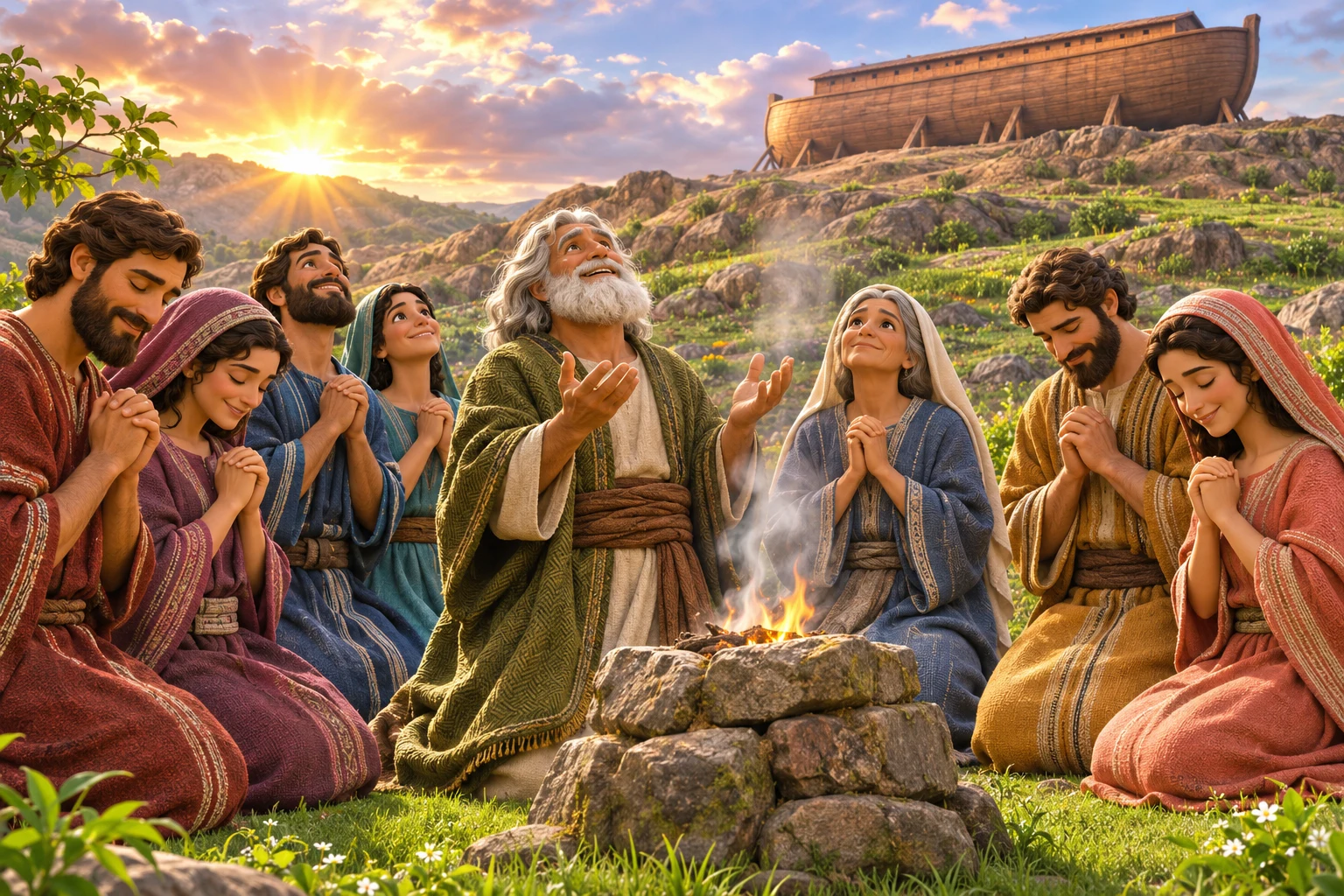
The Flood was over. Noah and his family came out of the ark. Noah built an altar and worshiped God. A new chapter of life on earth was beginning. And Noah builded an altar unto the LORD; and took of every clean beast, and of every clean fowl, and offered burnt offerings on the altar.
Genesis 8:20 (KJV)Remember the rainbow
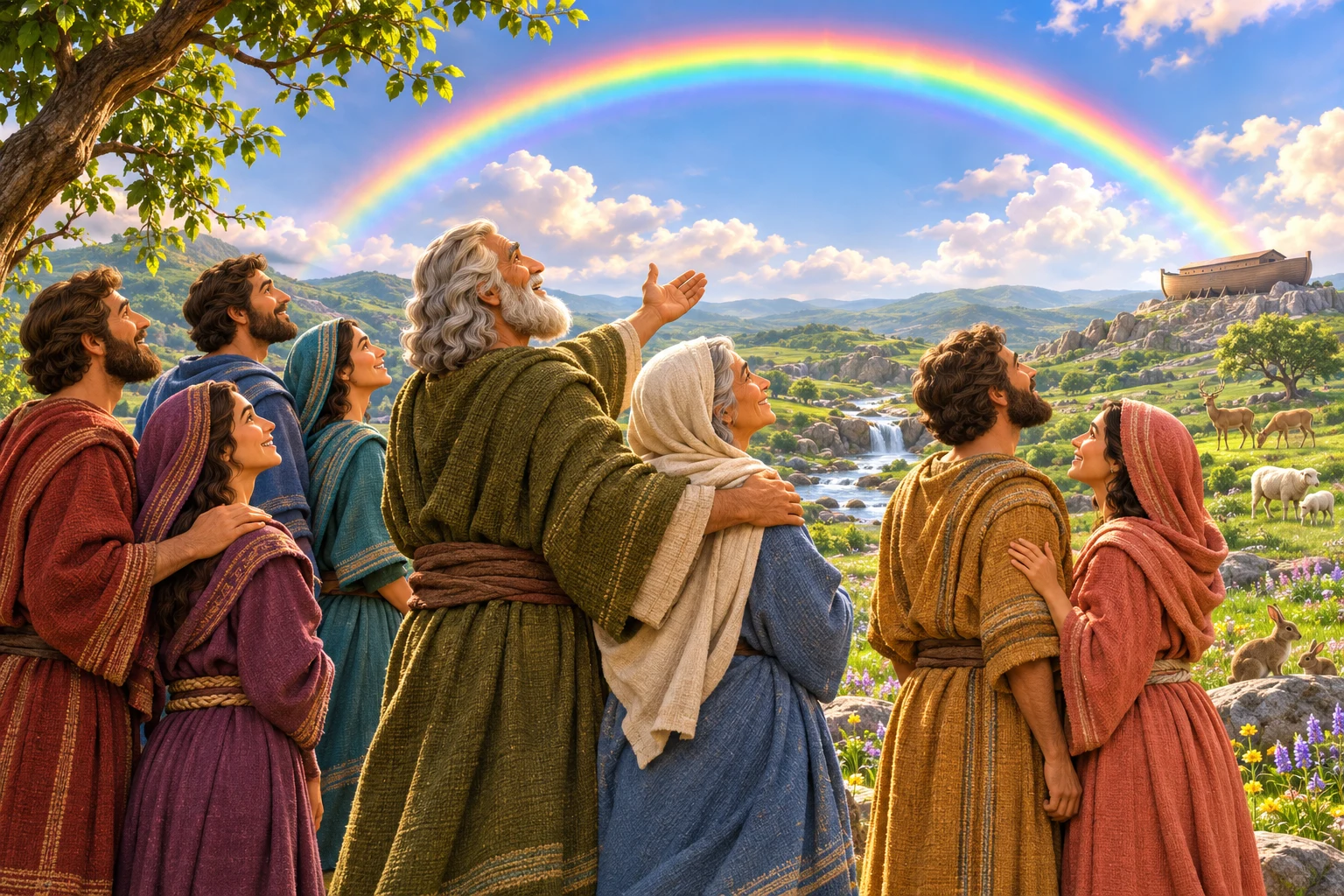
God made a lasting promise to Noah, his descendants, and every living creature. He would never again destroy the whole earth with a flood. The rainbow was the sign of His promise. I do set my bow in the cloud, and it shall be for a token of a covenant between me and the earth.
Genesis 9:13 (KJV)One family grows
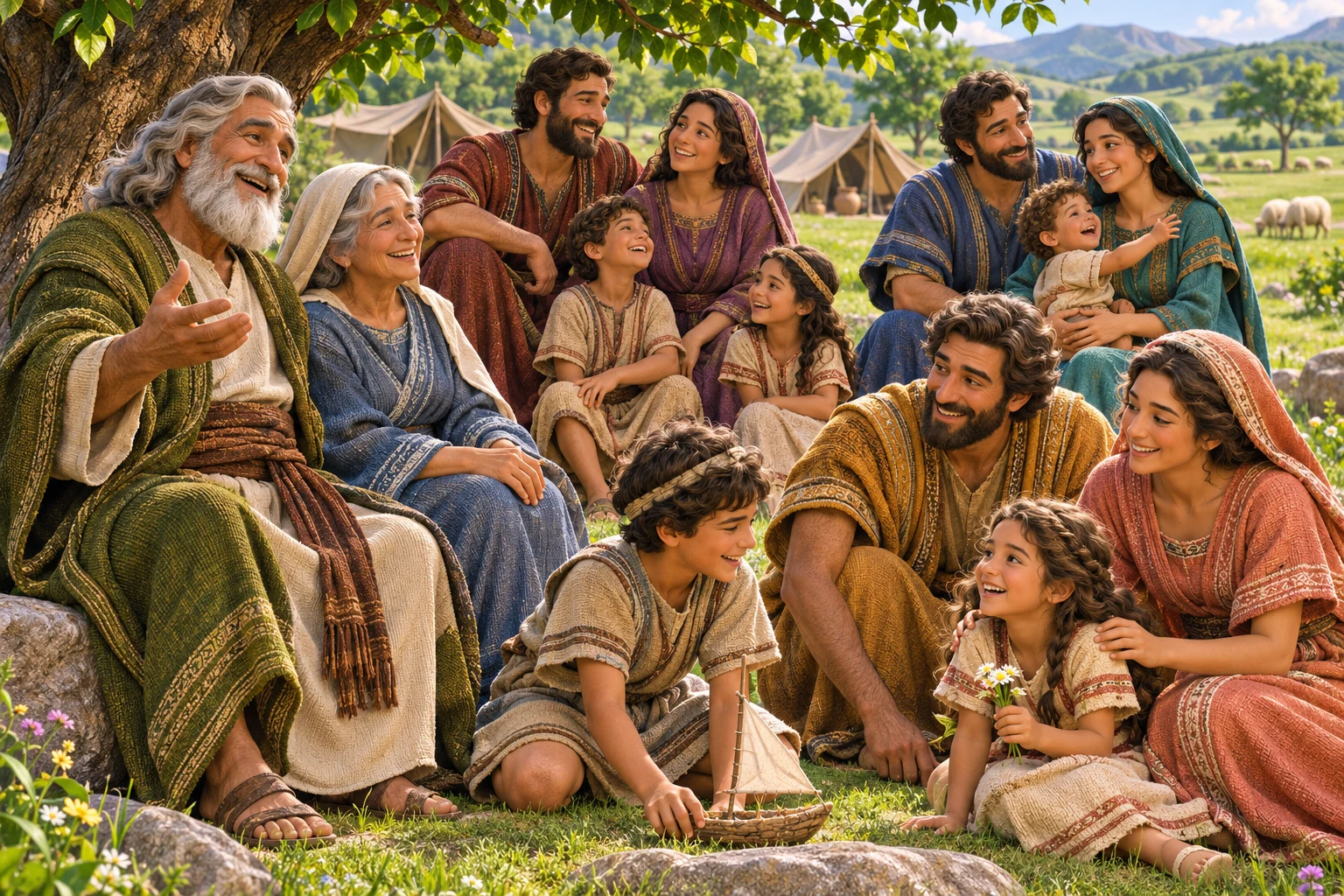
Noah’s sons were Shem, Ham, and Japheth. Their families grew after the Flood. Genesis tells us that the people who filled the earth came from these three family lines. These are the three sons of Noah: and of them was the whole earth overspread.
Genesis 9:19 (KJV)Noah plants a vineyard
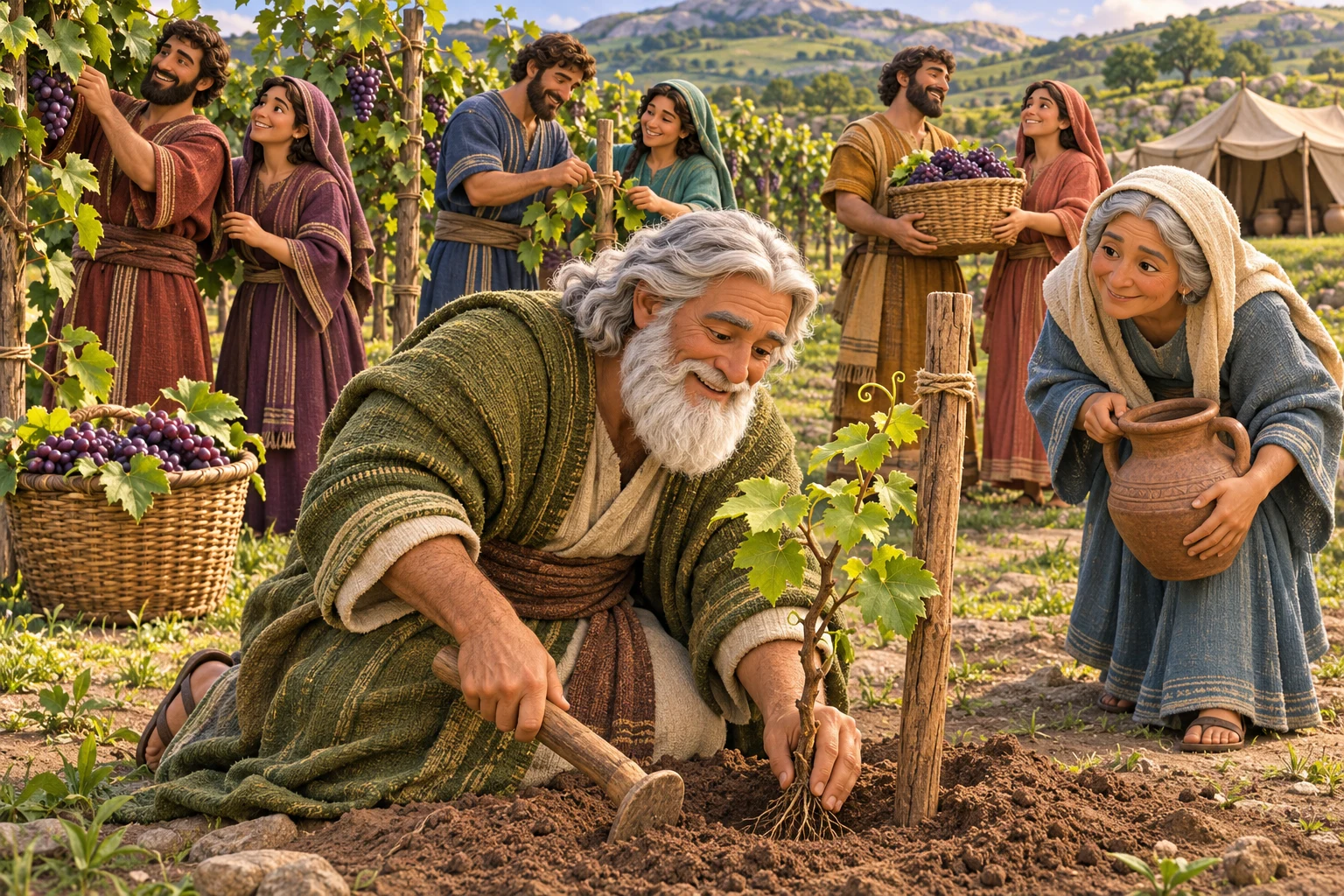
Noah became a farmer and planted a vineyard. He lived for 350 years after the Flood. Altogether, Noah lived 950 years! And Noah began to be an husbandman, and he planted a vineyard:
Genesis 9:20 (KJV)A lesson in care and respect
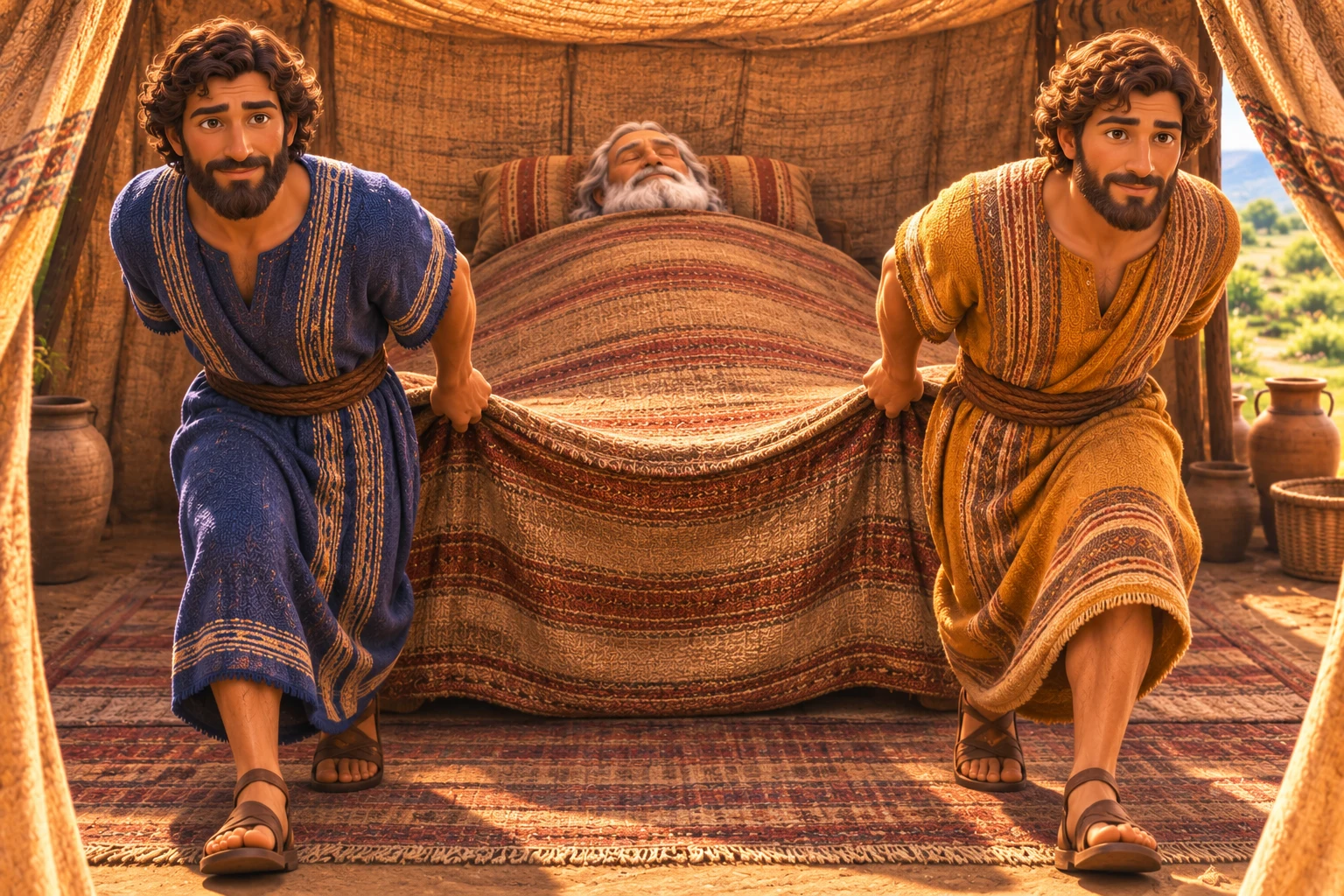
One day Noah drank wine and became drunk in his tent. Ham saw him uncovered and told his brothers. Shem and Japheth walked backward with a garment and covered their father without looking at him. And Shem and Japheth took a garment, and laid it upon both their shoulders, and went backward, and covered the nakedness of their father; and their faces were backward, and they saw not their father's nakedness.
Genesis 9:23 (KJV)Families become nations
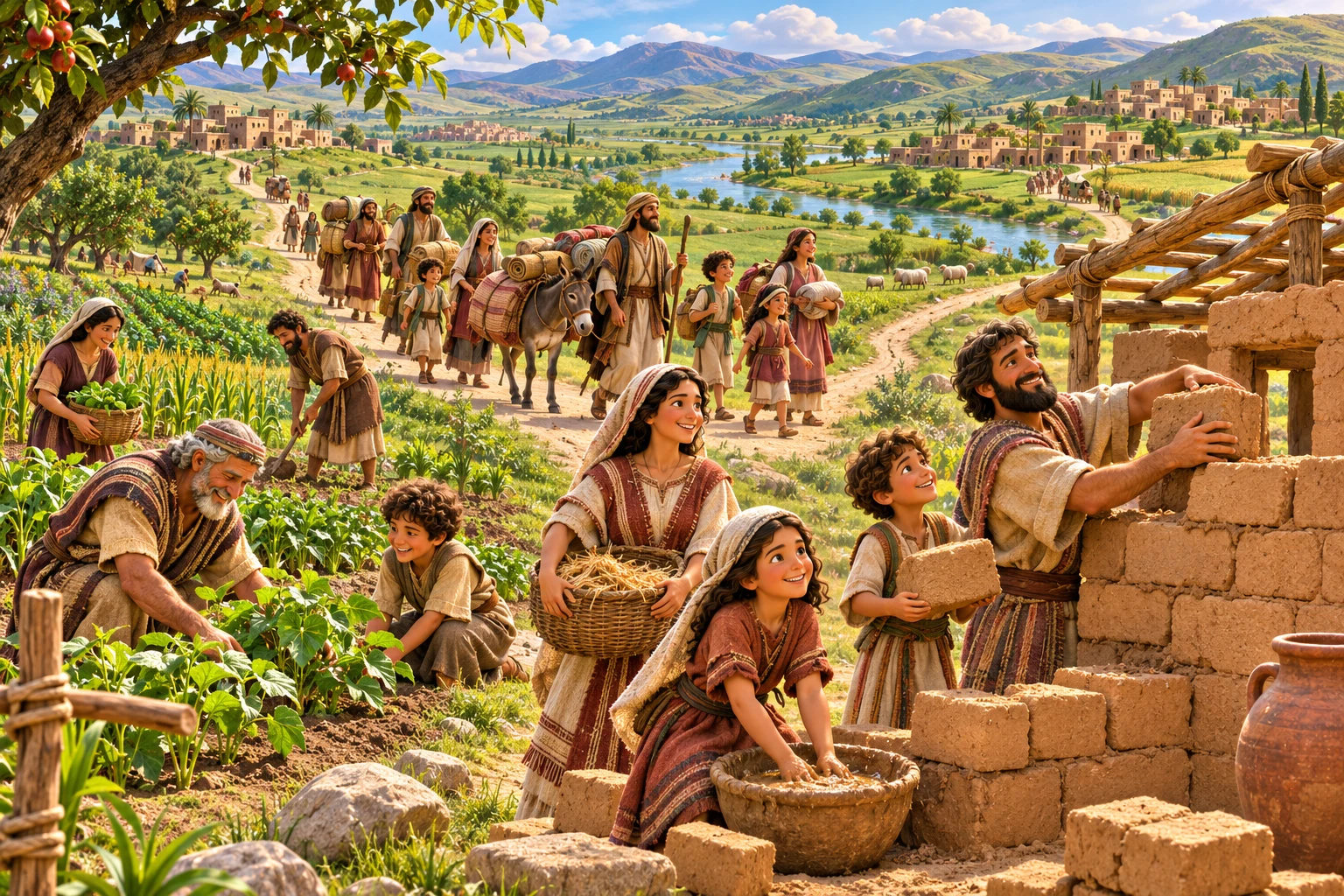
Children grew up and had children of their own. Genesis 10 records the descendants of Japheth, Ham, and Shem. These families became nations in different lands. All belonged to the same human family. These are the families of the sons of Noah, after their generations, in their nations: and by these were the nations divided in the earth after the flood.
Genesis 10:32 (KJV)Babel in the land of Shinar
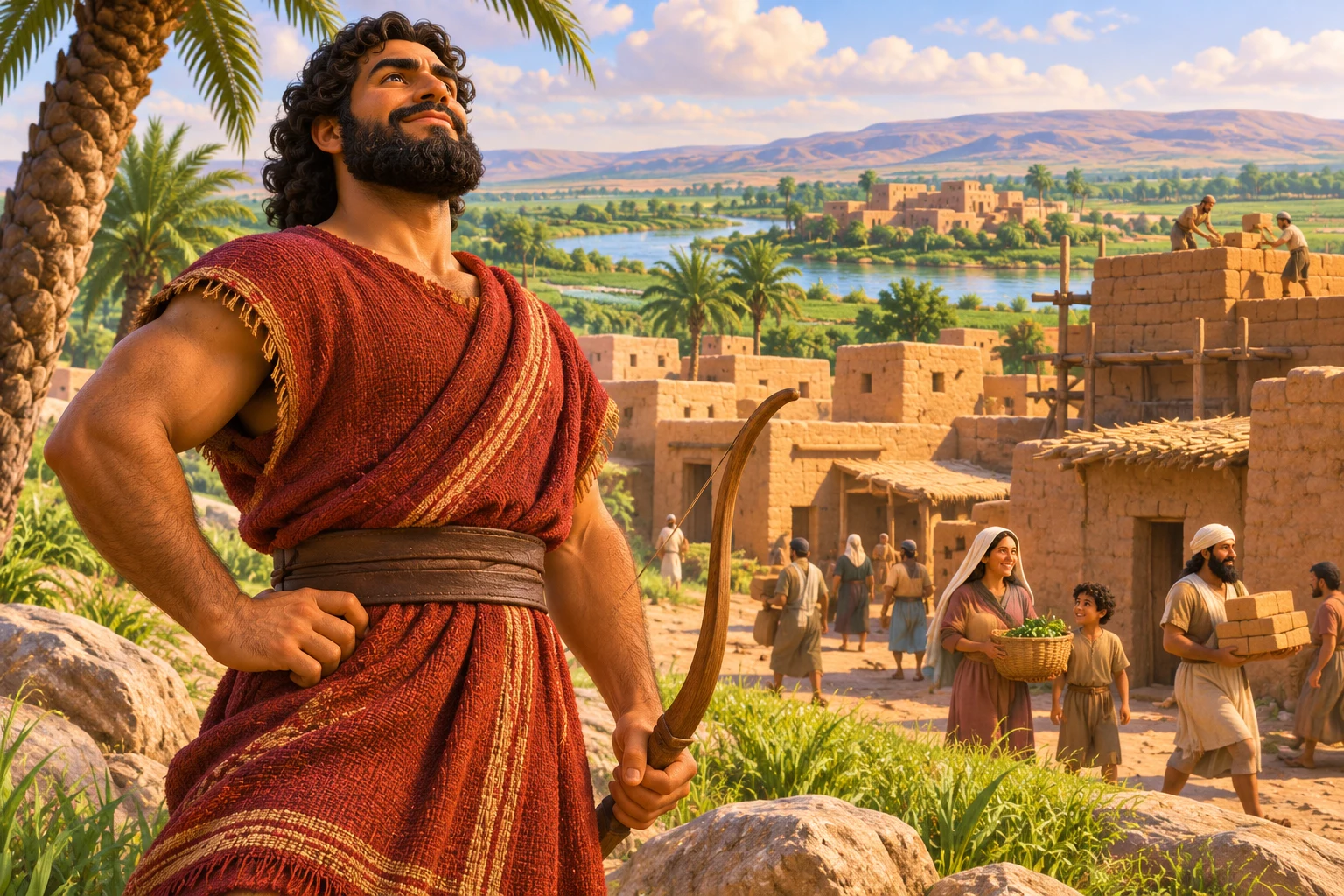
Genesis also names Nimrod, a descendant of Ham through Cush. He became a mighty hunter. Babel, in the land of Shinar, was among the first cities of his kingdom. And Cush begat Nimrod: he began to be a mighty one in the earth.
Genesis 10:8 (KJV)Josephus adds
Josephus describes Nimrod as encouraging the people to depend on their own strength and resist God. He connects Nimrod with the tower’s builders. This detail comes from Josephus’s later account; Genesis does not explicitly name the tower’s leader.
Josephus · Antiquities of the Jews, book 1, chapter 4, sections 2–3
One language, one plain
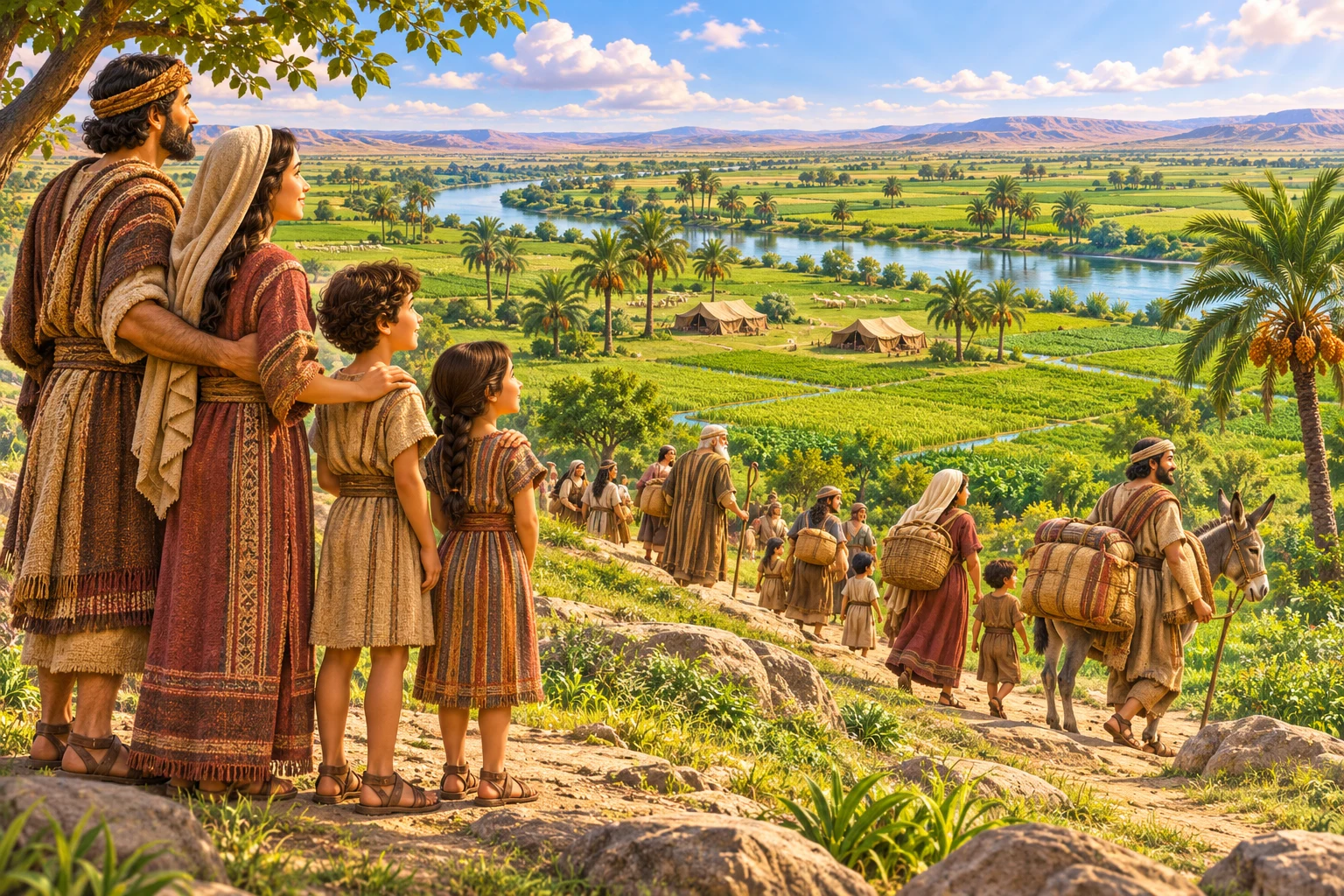
Genesis 11 tells how people once shared one language. As they traveled, they found a plain in Shinar and settled there. They could understand one another as they planned their city. And the whole earth was of one language, and of one speech.
Genesis 11:1 (KJV)Ellen White adds
Ellen White describes a separation between people who worshiped God and people who wanted to turn away from Him. Those who left settled on the fertile plain of Shinar.
A city and a tall tower
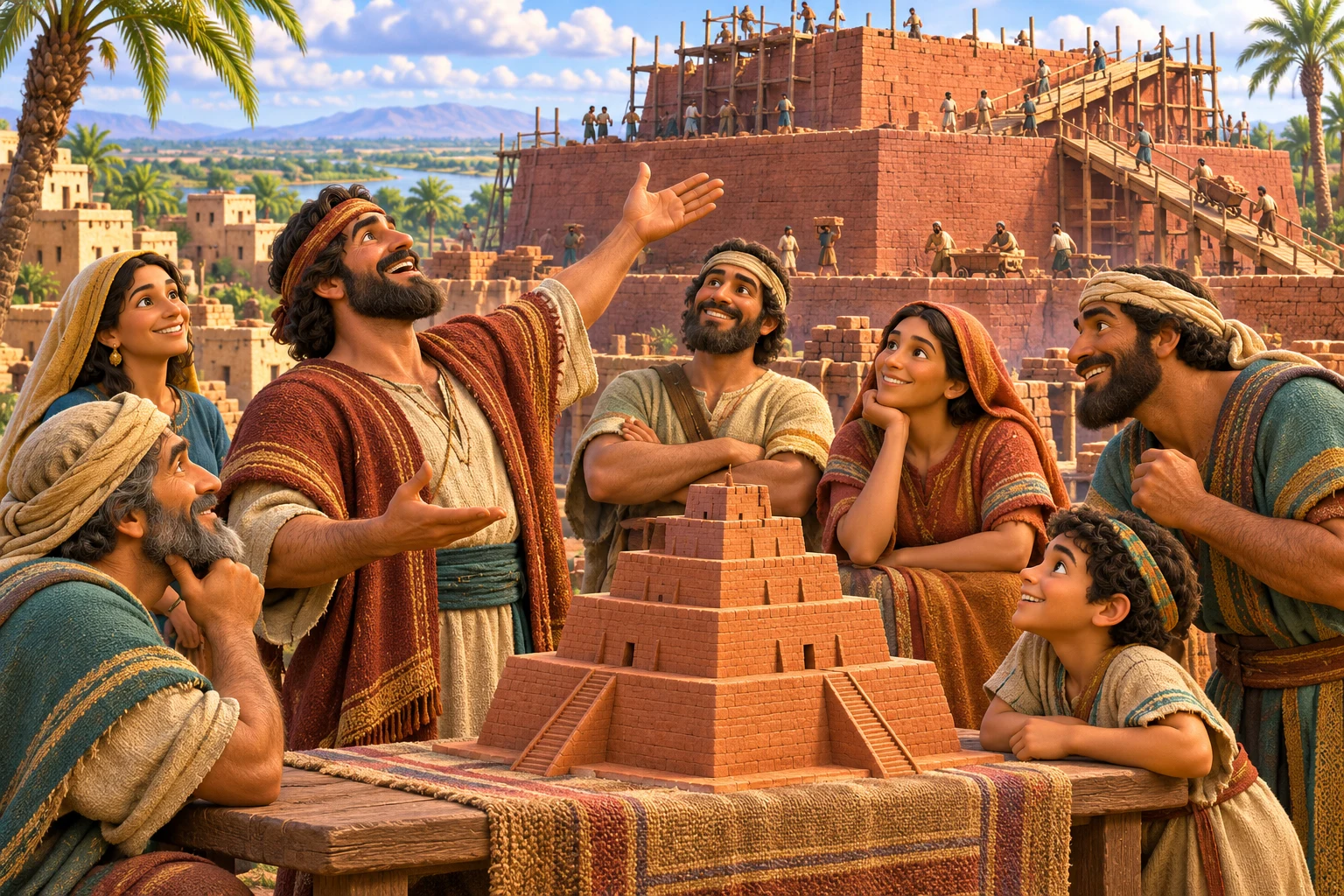
The people decided to build a city and a tower reaching toward heaven. They wanted to make a name for themselves and keep from being scattered across the earth. And they said, Go to, let us build us a city and a tower, whose top may reach unto heaven; and let us make us a name, lest we be scattered abroad upon the face of the whole earth.
Genesis 11:4 (KJV)Brick by brick
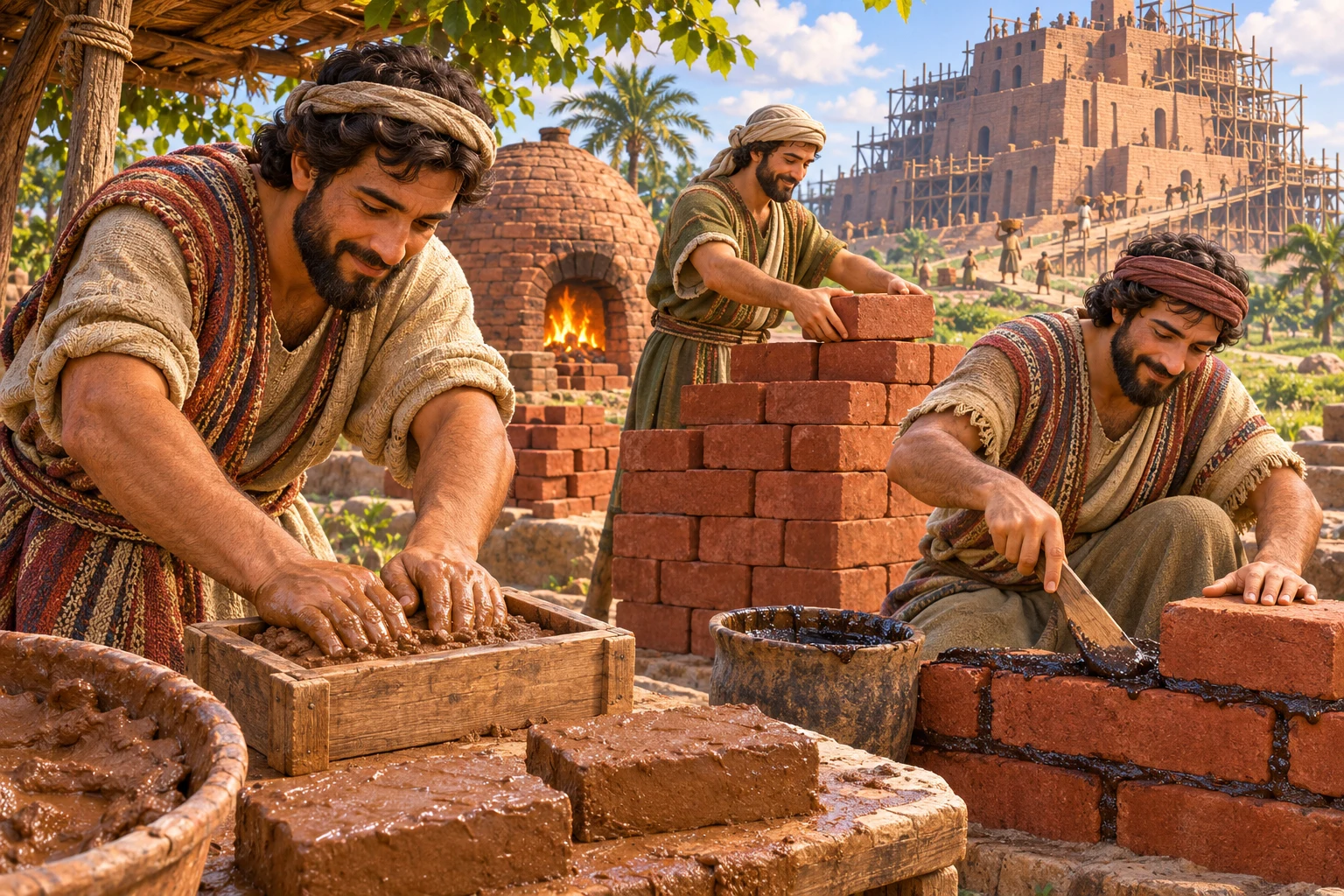
Workers made bricks and baked them thoroughly. They used bricks instead of stone, and bitumen—a sticky material—as mortar to hold the bricks together. Their great building project grew. And they said one to another, Go to, let us make brick, and burn them thoroughly. And they had brick for stone, and slime had they for morter.
Genesis 11:3 (KJV)Ellen White adds
Ellen White explains that the tower expressed the builders’ pride. Some also wanted safety from another flood, rather than trusting God’s promise.
God sees their plans
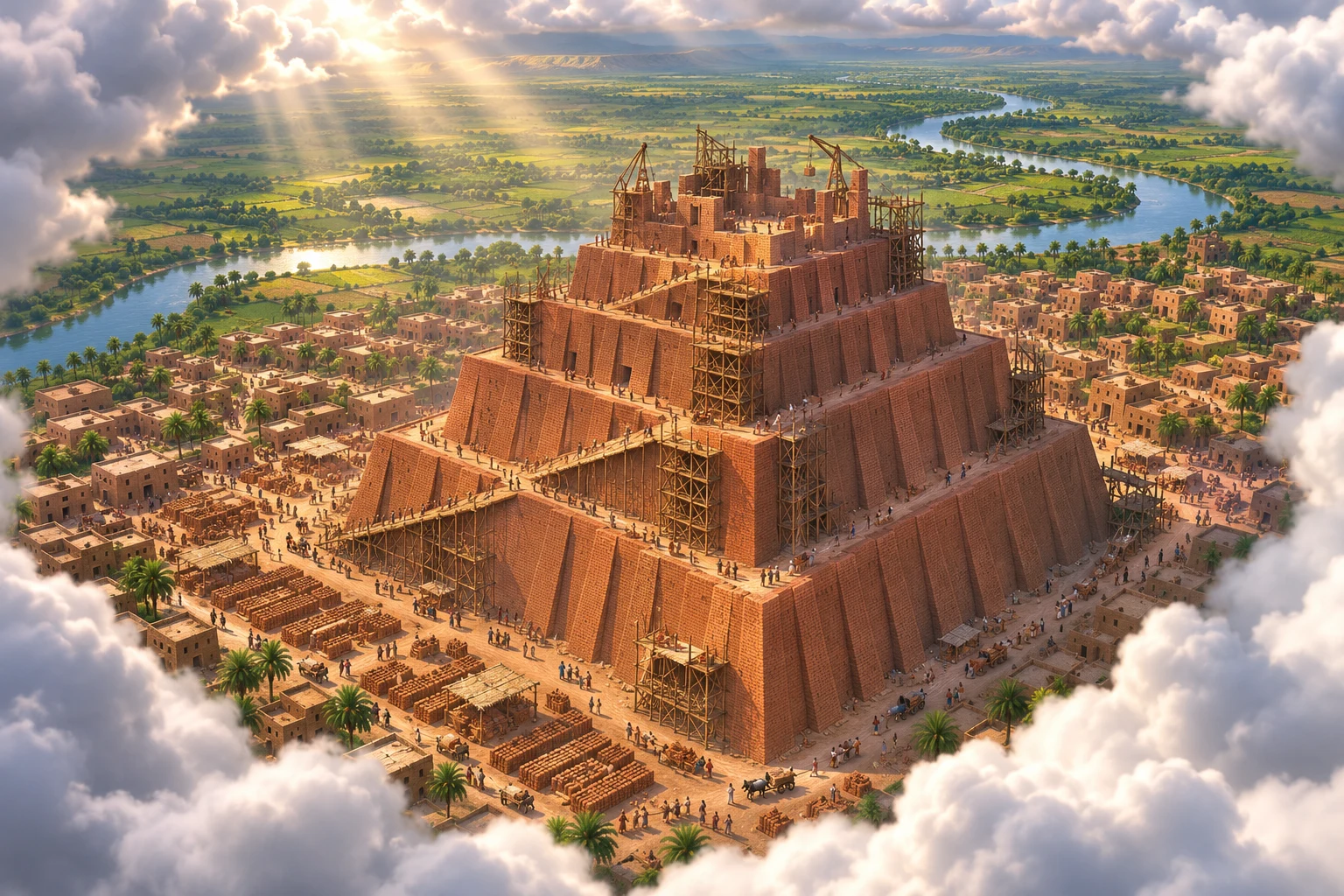
The Lord saw the city and tower. The people were united in their plan. God chose to confuse their language so that they could no longer understand one another’s speech. And the LORD came down to see the city and the tower, which the children of men builded.
Genesis 11:5 (KJV)What are you saying?
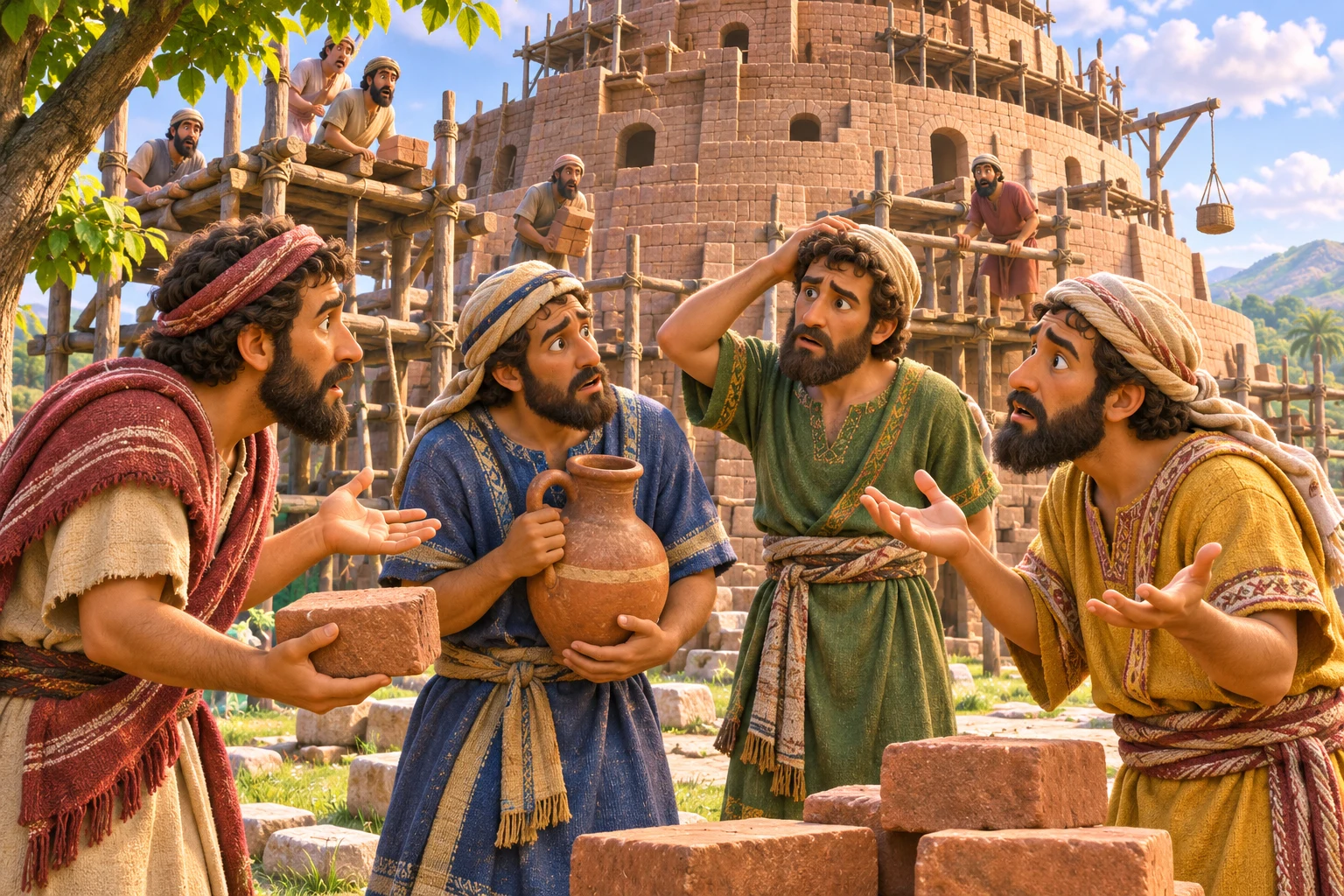
Suddenly, the workers could not understand each other. Building together was no longer possible. Work on the city stopped. Their plan to stay together had failed. Go to, let us go down, and there confound their language, that they may not understand one another's speech.
Genesis 11:7 (KJV)Ellen White adds
Ellen White describes instructions passing between workers at different heights. When their language changed, messages became confused and the work came to a standstill.
From Babel to many lands
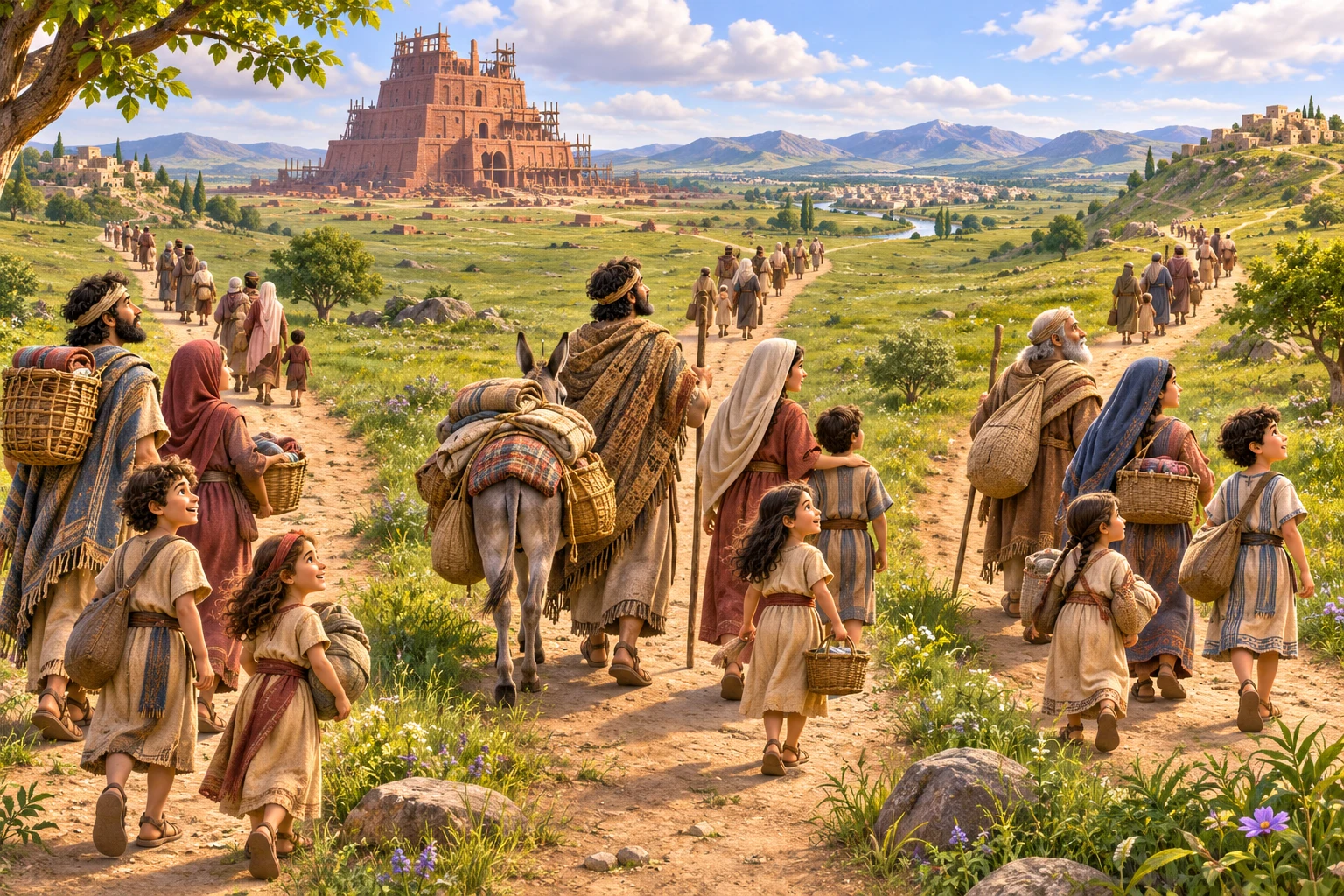
The Lord scattered the people across the earth. The place was called Babel because their language was confused there. God’s plan for people to fill the earth continued. So the LORD scattered them abroad from thence upon the face of all the earth: and they left off to build the city.
Genesis 11:8 (KJV)Ellen White adds
Ellen White describes people gathering with those whose speech they could understand. Different groups traveled in different directions and made new homes.
Next story: From Babel to Abram
About the sources and pictures
The captions are a child-friendly retelling of selected events, not a word-for-word Bible translation. Open each Bible reference to read the passage. Ellen White’s commentary and Josephus’s later historical retelling appear in separate, labeled notes. The pictures are imaginative illustrations; the Bible does not give an exact design for Babel’s tower.
Genesis 9–11 · King James Version