From Babel to Abram
Genesis 11–12 · A new journey of faith · Narrated by Jon
Families make new homes
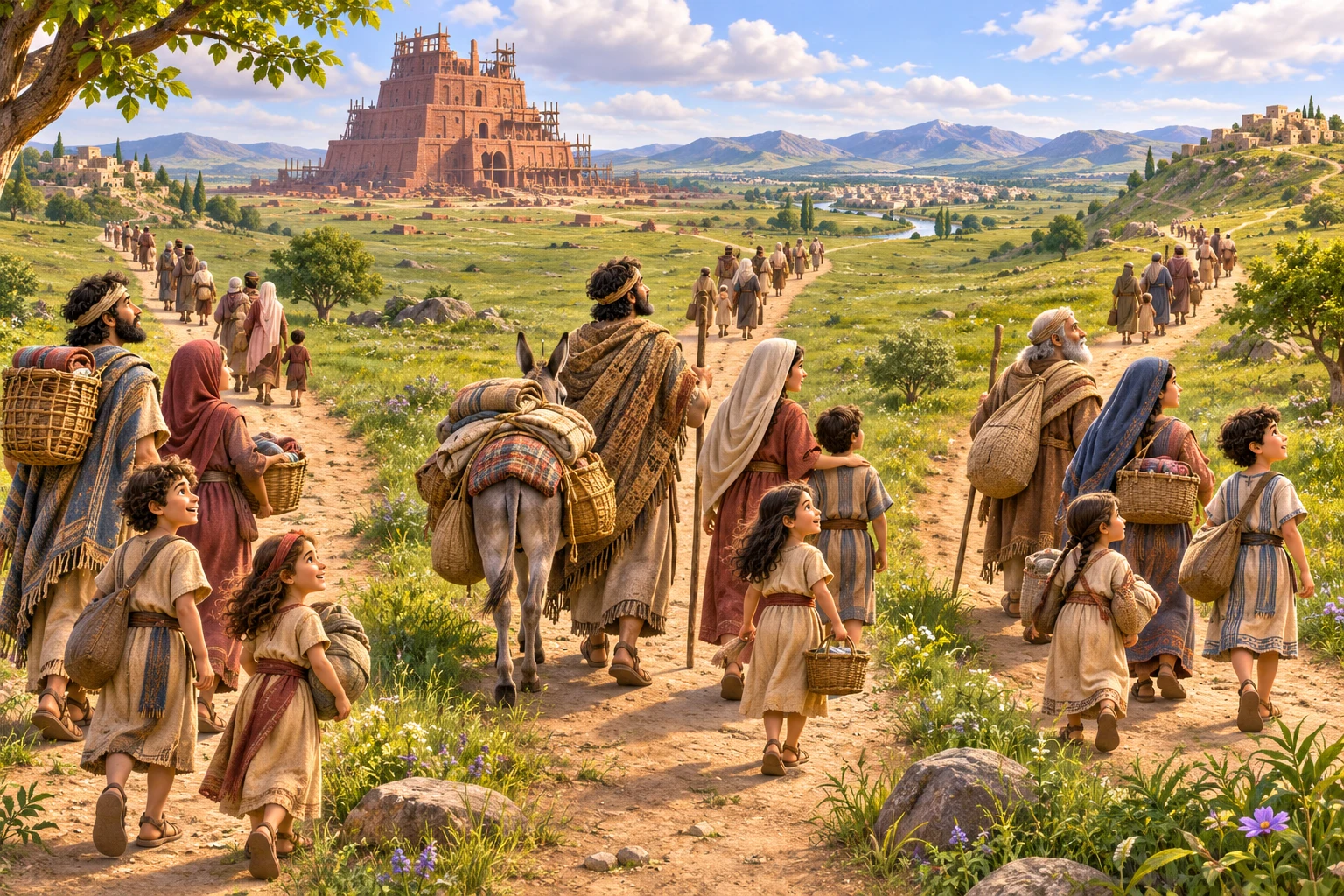
After Babel, families spread across the earth. People made homes in different places and spoke different languages. The Bible now follows one family line that leads to a man named Abram. So the LORD scattered them abroad from thence upon the face of all the earth: and they left off to build the city.
Genesis 11:8 (KJV)From Shem to Abram
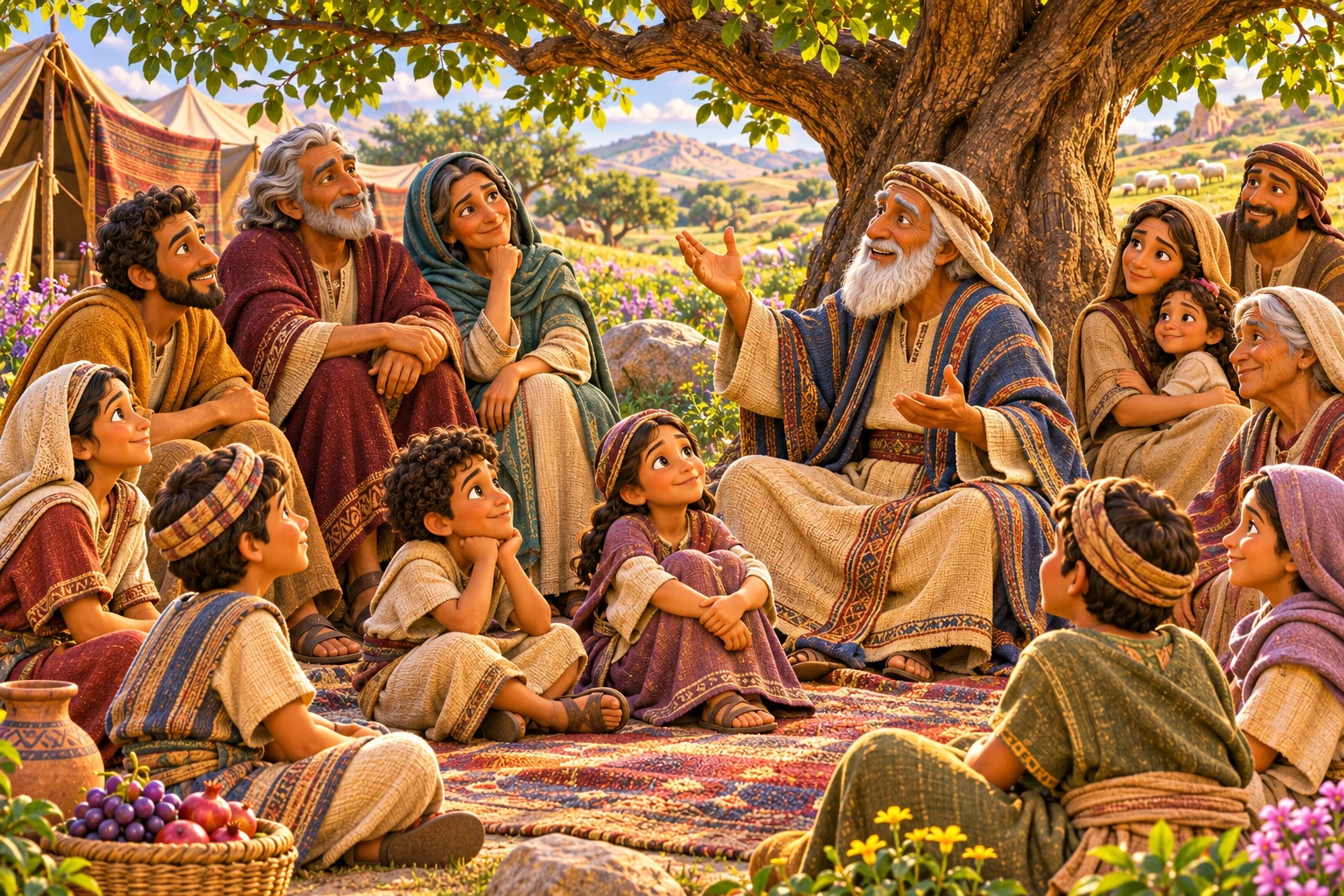
Abram belonged to the family line of Shem, Noah’s son. Genesis traces the generations: Shem, Arphaxad, Salah, Eber, Peleg, Reu, Serug, Nahor, Terah, and Abram. Many generations connect Noah’s family to this new story. And Terah lived seventy years, and begat Abram, Nahor, and Haran.
Genesis 11:26 (KJV)Meet Abram in Ur
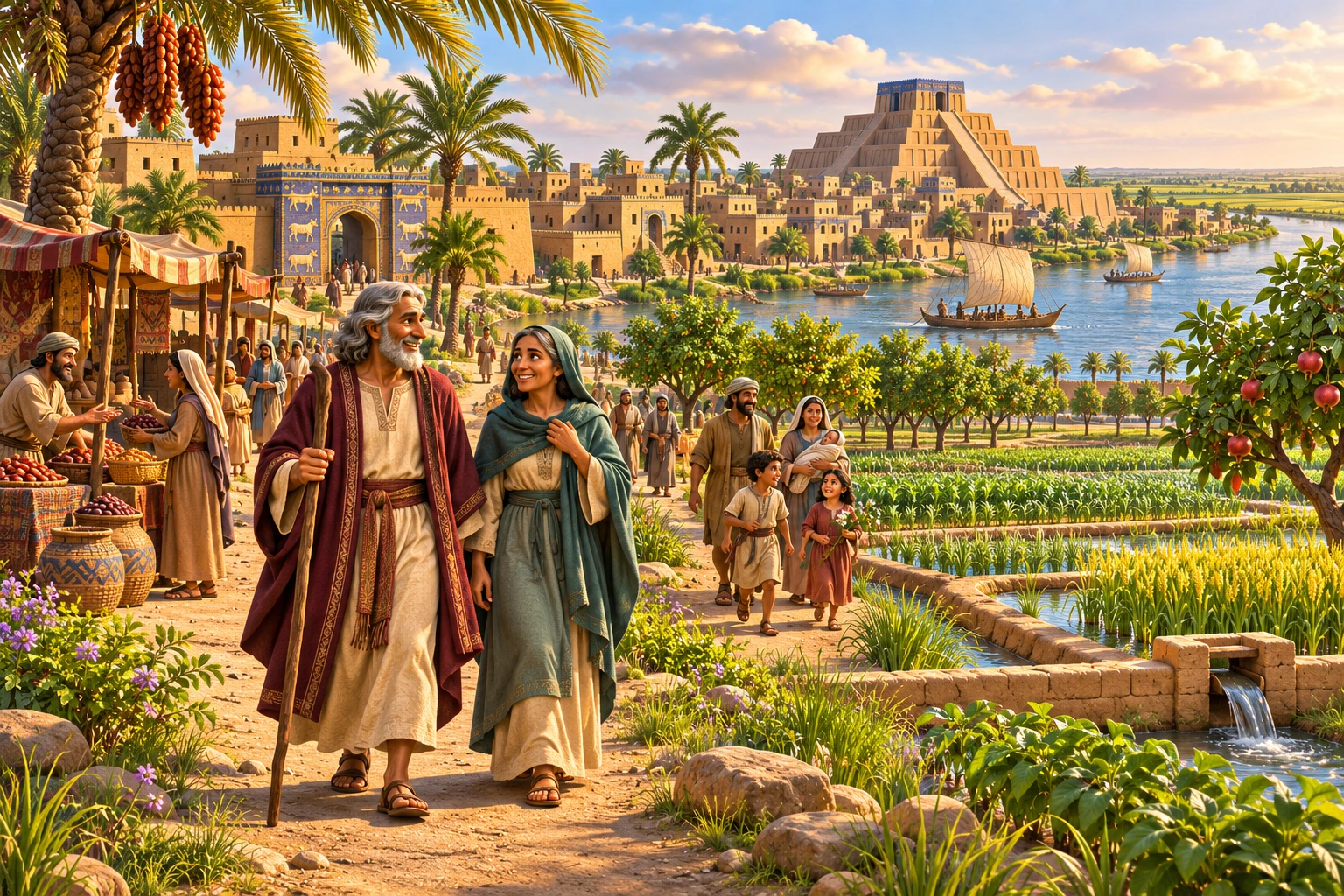
Abram’s father was named Terah. His family lived in Ur of the Chaldees. This busy city was the place Abram would leave when God called him to a different life. Now these are the generations of Terah: Terah begat Abram, Nahor, and Haran; and Haran begat Lot.
Genesis 11:27 (KJV)Sarai and Lot
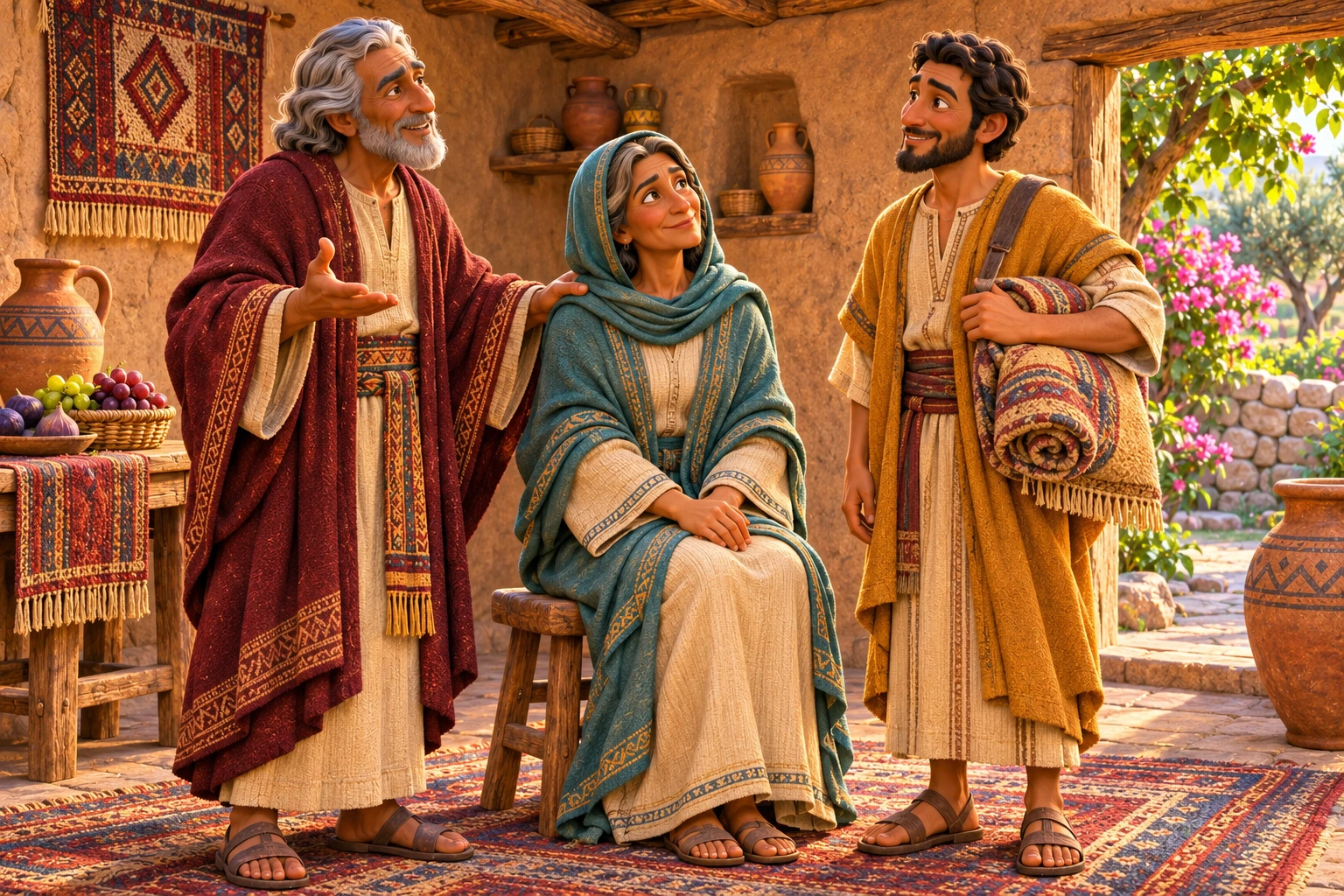
Abram’s wife was named Sarai. His nephew Lot was the son of Abram’s brother Haran. Haran had died, and Lot would travel with Abram. At this time, Abram and Sarai had no children. But Sarai was barren; she had no child.
Genesis 11:30 (KJV)Abram worships the true God
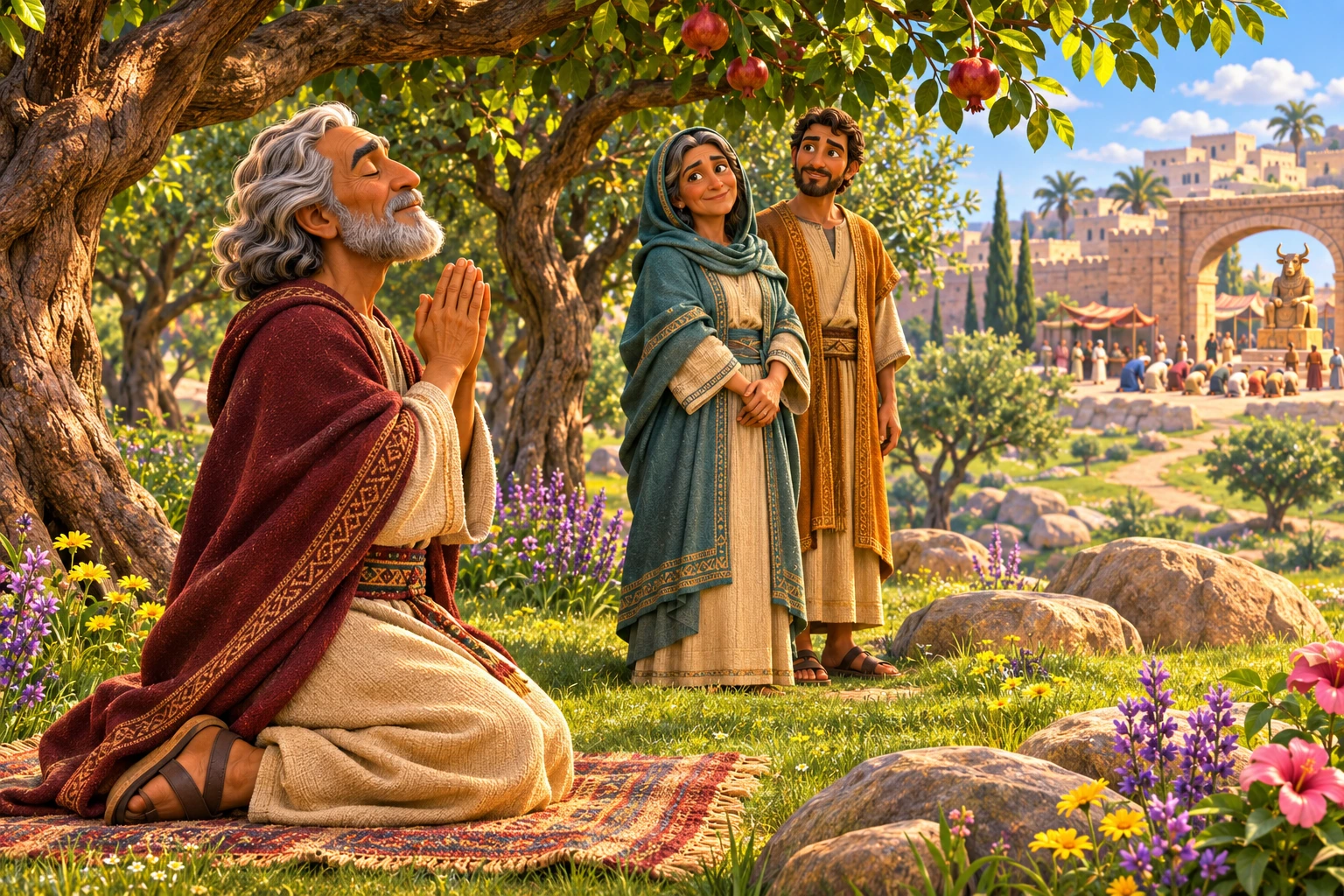
People around Abram worshiped other gods. Joshua later reminded Israel that even Terah’s household had served other gods. Ellen White describes Abram remaining faithful to the worship of the one true God. Your fathers dwelt on the other side of the flood in old time, even Terah, the father of Abraham, and the father of Nachor: and they served other gods.
Joshua 24:2 (excerpt) (KJV)Ellen White adds
Ellen White describes Abram resisting the idolatry around him and preserving the knowledge of God.
God calls Abram
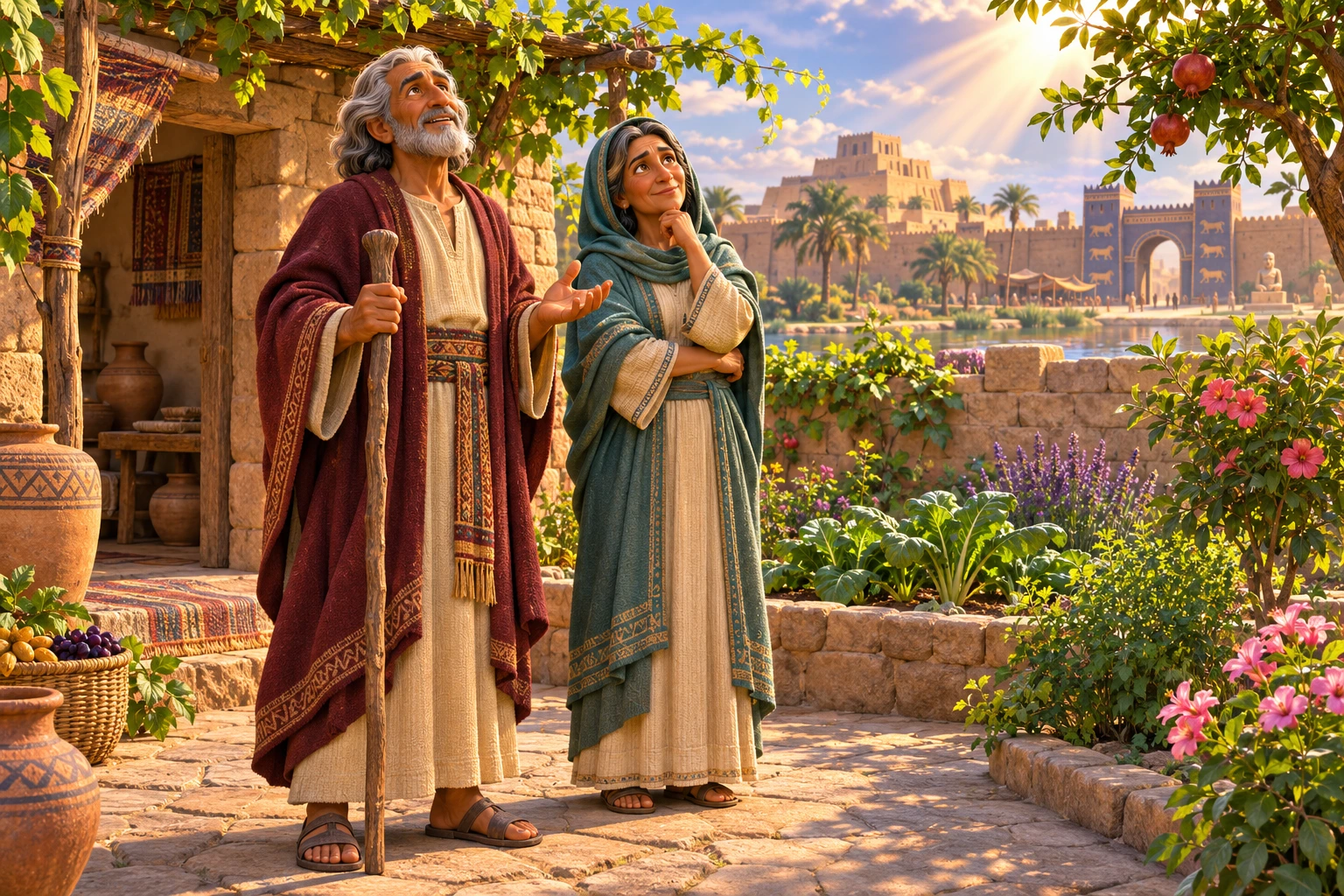
God called Abram to leave his country and family home for a land He would show him. Acts says this call began before Abram lived in Haran. Abram would need to trust God without seeing the whole journey ahead. Now the LORD had said unto Abram, Get thee out of thy country, and from thy kindred, and from thy father’s house, unto a land that I will shew thee:
Genesis 12:1 (KJV)Bible · Genesis 12:1; Acts 7:2–3
Ellen White adds
Ellen White places the first call in Ur and describes leaving familiar surroundings as a test of faith.
A blessing for many families
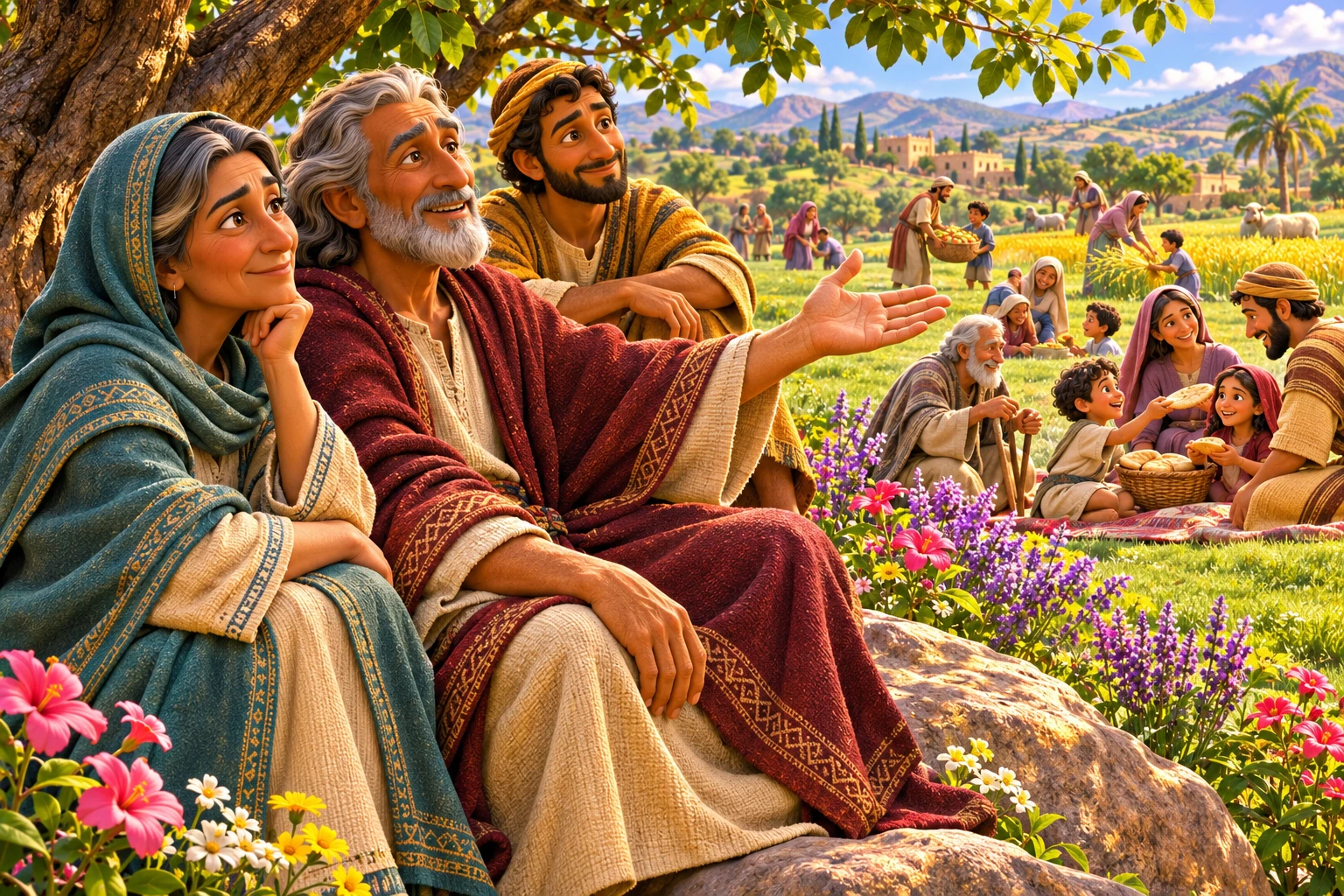
God promised to make Abram a great nation, bless him, and make him a blessing. Through him, all the families of the earth would be blessed. This promise reached far beyond Abram’s own household. And I will make of thee a great nation, and I will bless thee, and make thy name great; and thou shalt be a blessing:
Genesis 12:2 (KJV)The family stops in Haran
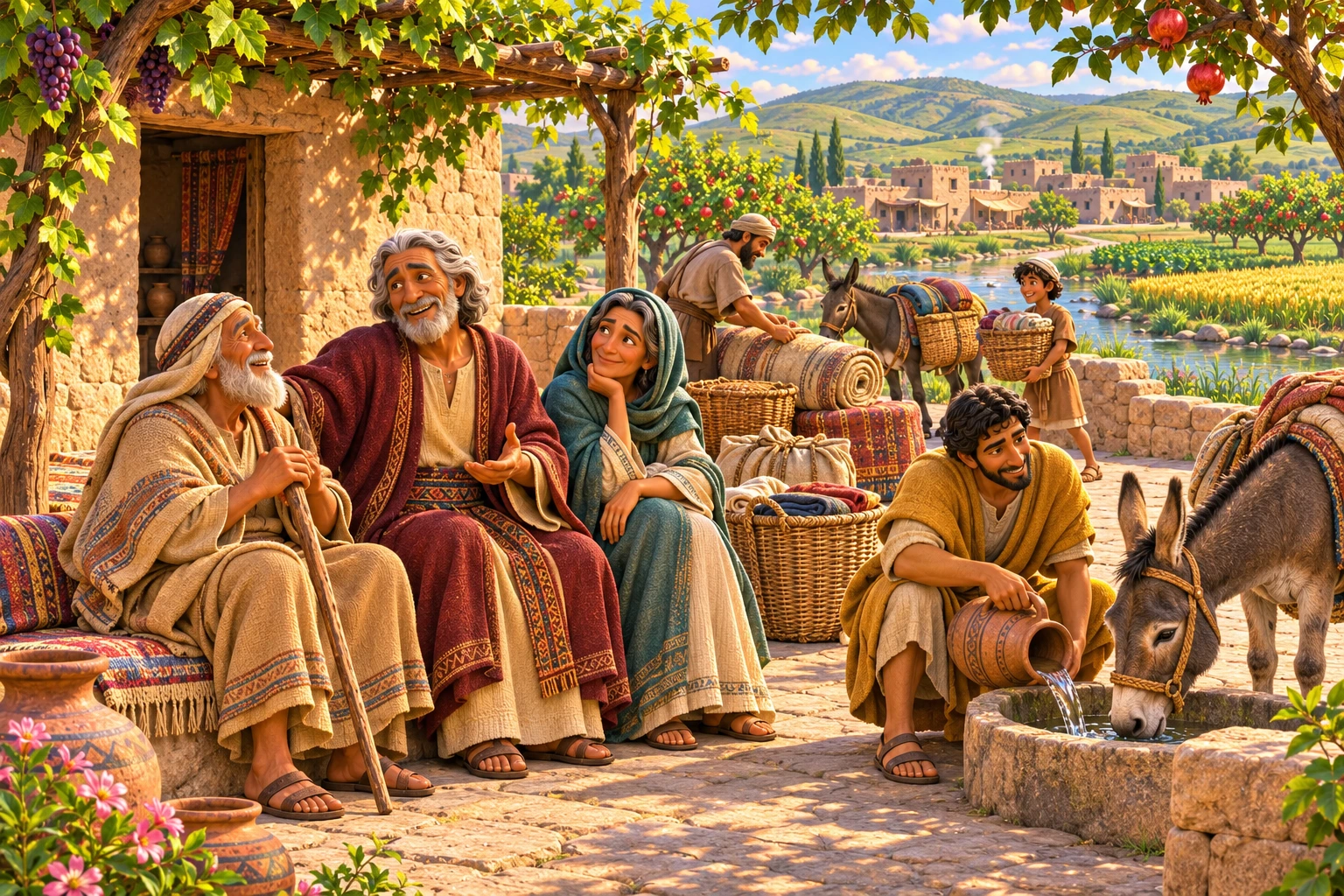
Terah took Abram, Sarai, and Lot out of Ur to go toward Canaan. They reached Haran and settled there. Genesis records that Terah died in Haran. Abram’s journey would continue beyond this stopping place. And Terah took Abram his son, and Lot the son of Haran his son’s son, and Sarai his daughter in law, his son Abram’s wife; and they went forth with them from Ur of the Chaldees, to go into the land of Canaan; and they came unto Haran, and dwelt there.
Genesis 11:31 (KJV)Abram chooses to go
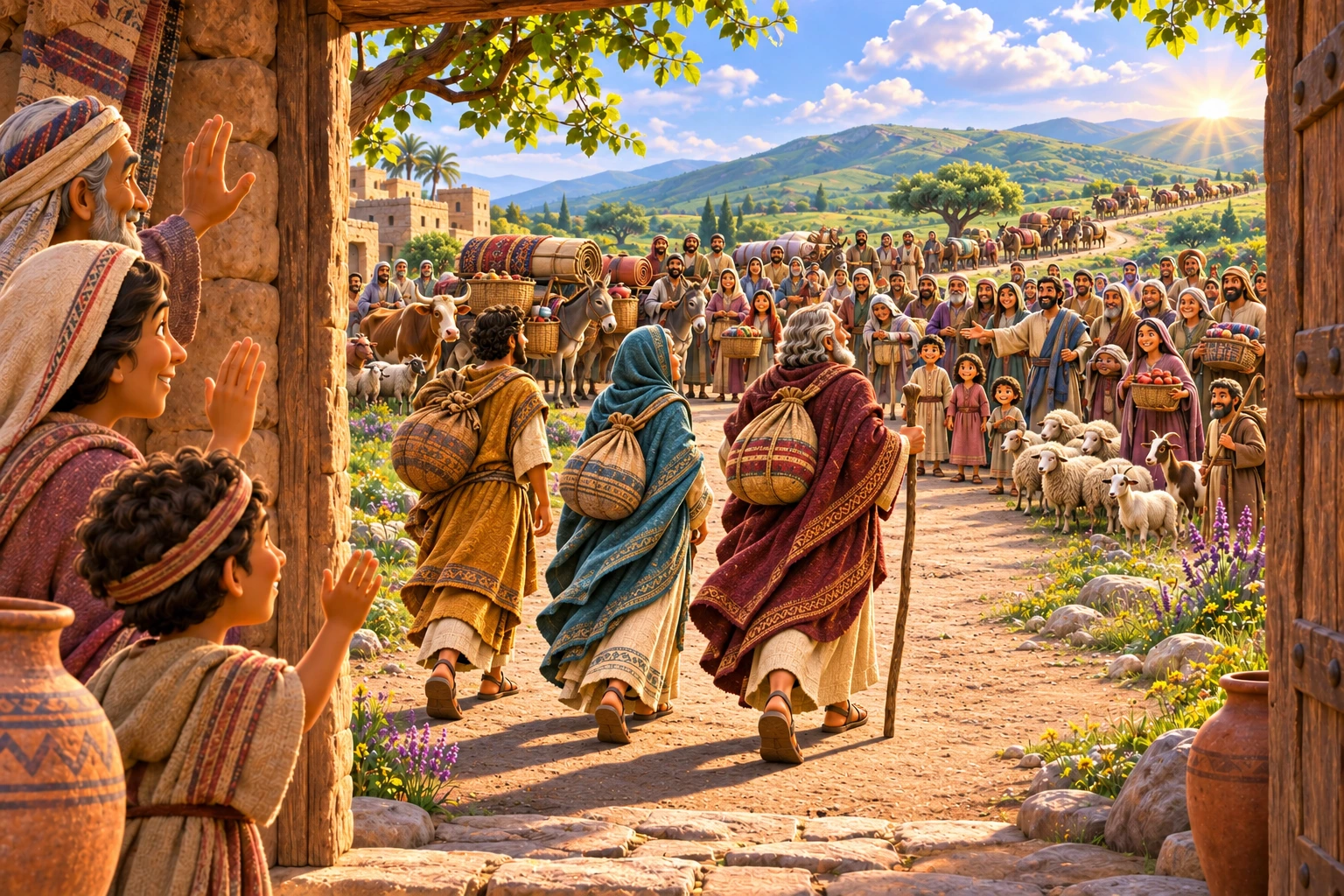
Abram did as the Lord had told him. He was seventy-five years old when he left Haran, and Lot went with him. Abram stepped into an unfamiliar future because he trusted the One who had called him. So Abram departed, as the LORD had spoken unto him; and Lot went with him: and Abram was seventy and five years old when he departed out of Haran.
Genesis 12:4 (KJV)A whole household on the move
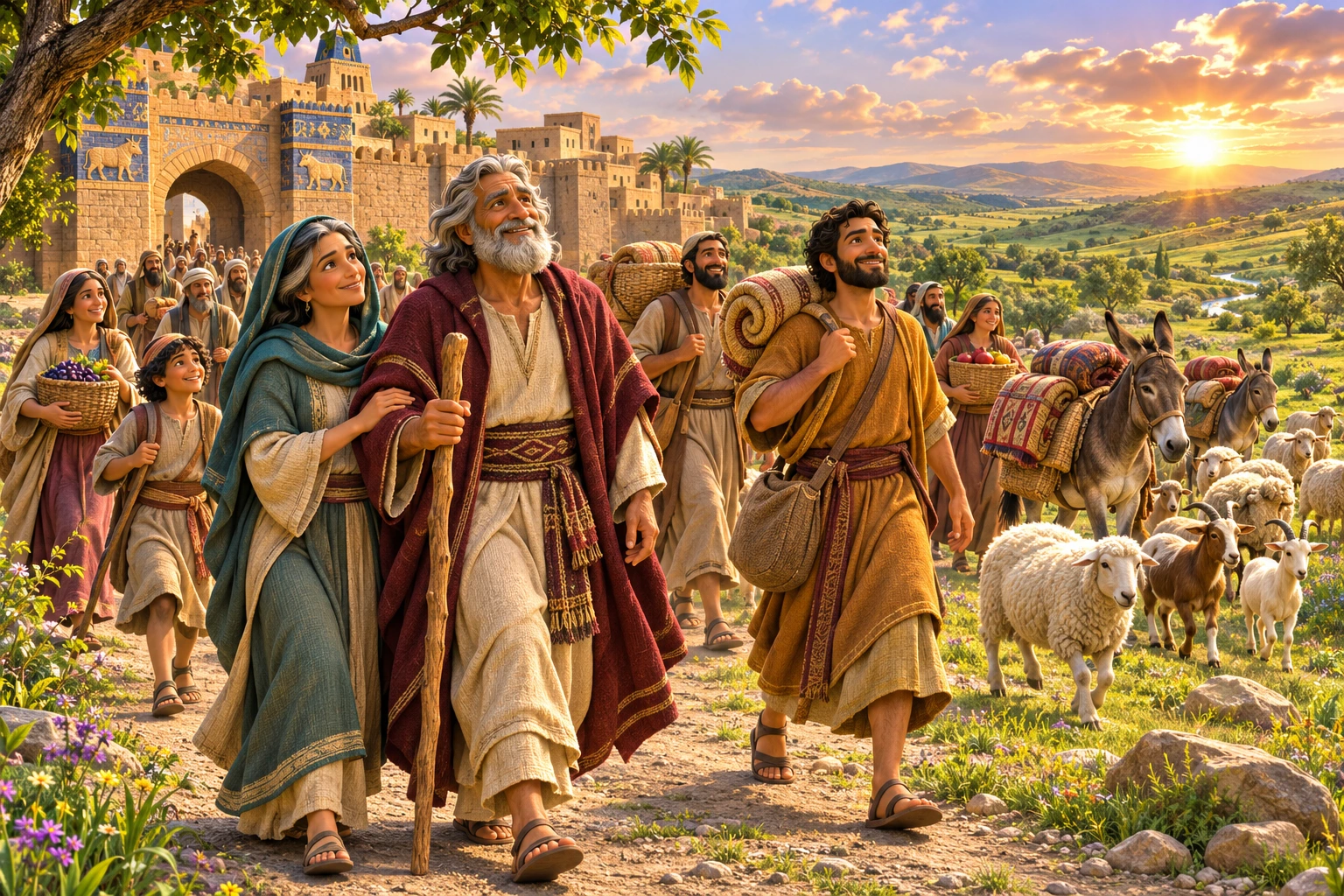
Abram took Sarai, Lot, their belongings, and the people who had joined their household in Haran. They traveled toward Canaan together. Ellen White describes a large company, including people Abram and Sarai had led to worship God. And they went forth to go into the land of Canaan; and into the land of Canaan they came.
Genesis 12:5 (excerpt) (KJV)Ellen White adds
Ellen White describes a large traveling household, including people taught to worship God during the stay in Haran.
At last, Canaan!
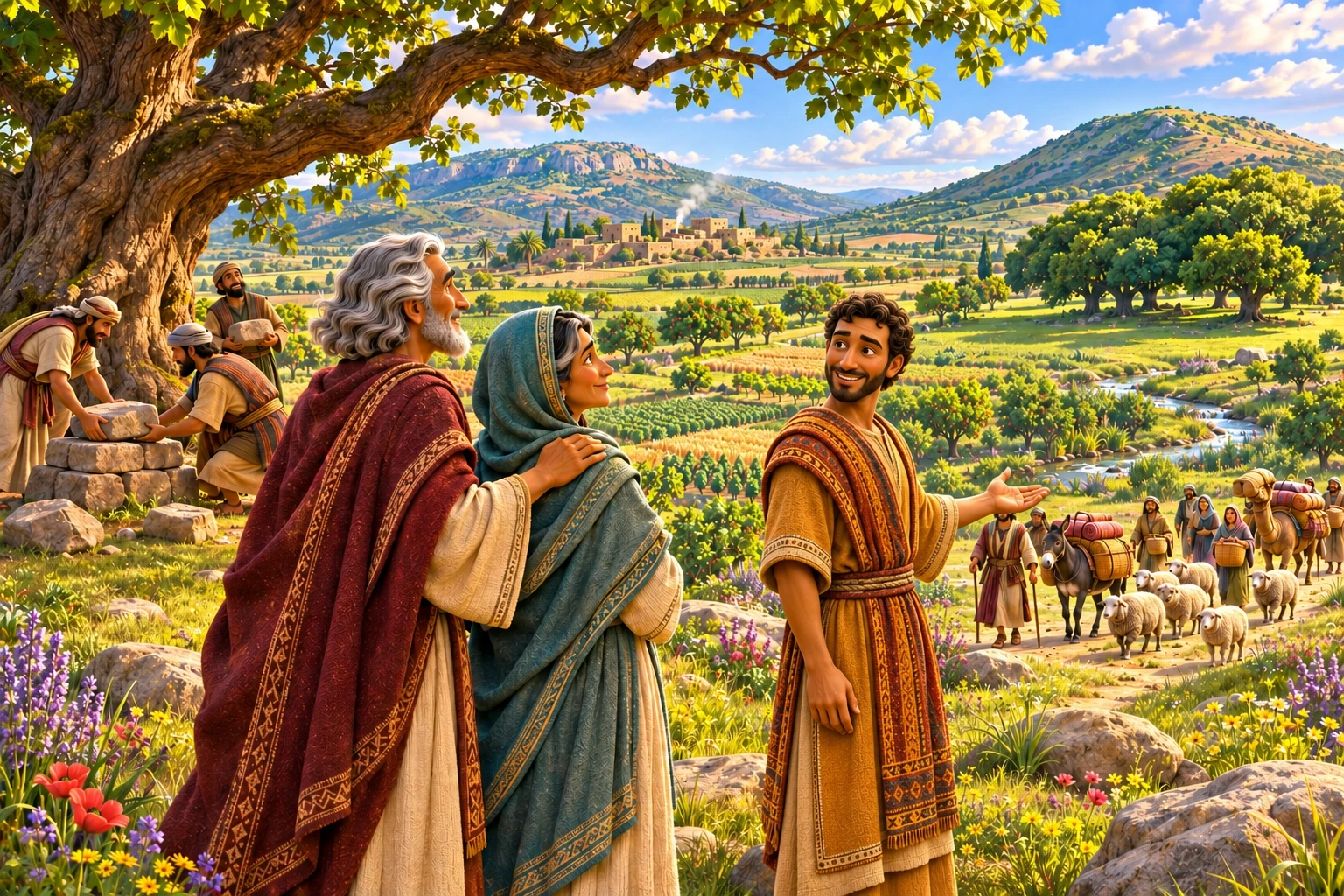
They reached Canaan. Abram traveled to Shechem, near Moreh. Other people already lived in this land. The Lord appeared to Abram and promised the land to his descendants. Abram built an altar to worship Him. And the LORD appeared unto Abram, and said, Unto thy seed will I give this land: and there builded he an altar unto the LORD, who appeared unto him.
Genesis 12:7 (KJV)A tent, an altar, and trust
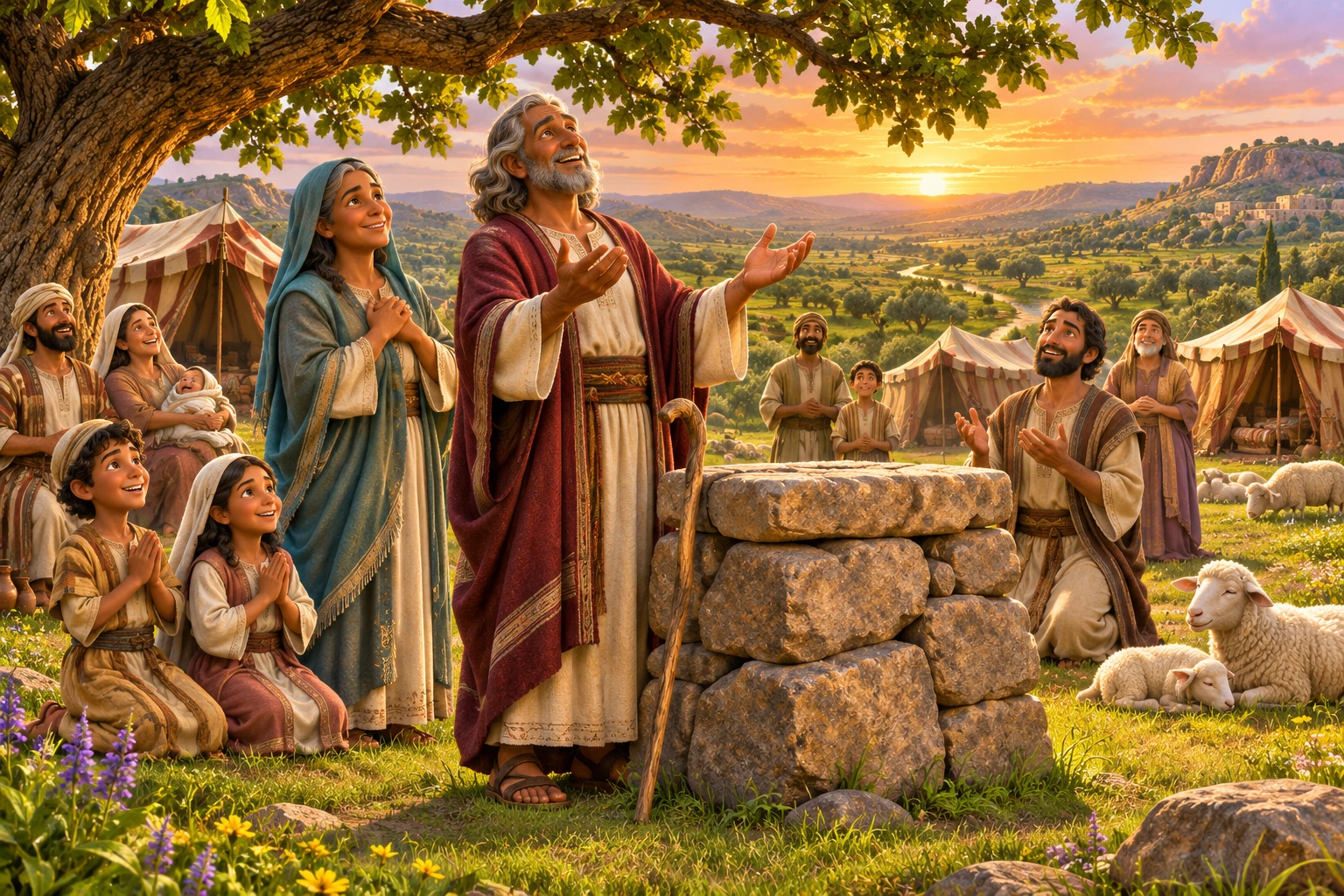
Later, Abram pitched his tent in the hill country between Bethel and Hai. He built another altar and called on the name of the Lord. As the journey continued toward the south, Abram’s home moved—but he kept worshiping God. And there he builded an altar unto the LORD, and called upon the name of the LORD.
Genesis 12:8 (excerpt) (KJV)
About this story
These captions retell selected events in Genesis 11:8–12:9, with Acts 7:2–4 and Joshua 24:2 for context. Bible Adventures includes KJV scripture and separately labeled Ellen White notes from Patriarchs and Prophets, chapter 11. Little Explorers uses shorter captions. Abram and Sarai receive their later names, Abraham and Sarah, in Genesis 17.
The pictures are imaginative illustrations, not exact reconstructions of ancient cities, clothing, or faces. Additional travelers pictured represent the household, not children of Abram and Sarai. Recorded narration will be added later.