Isaac: The Promise Continues
Genesis 20–26 · From Abraham and Sarah to Isaac’s wells
God protects Sarah in Gerar
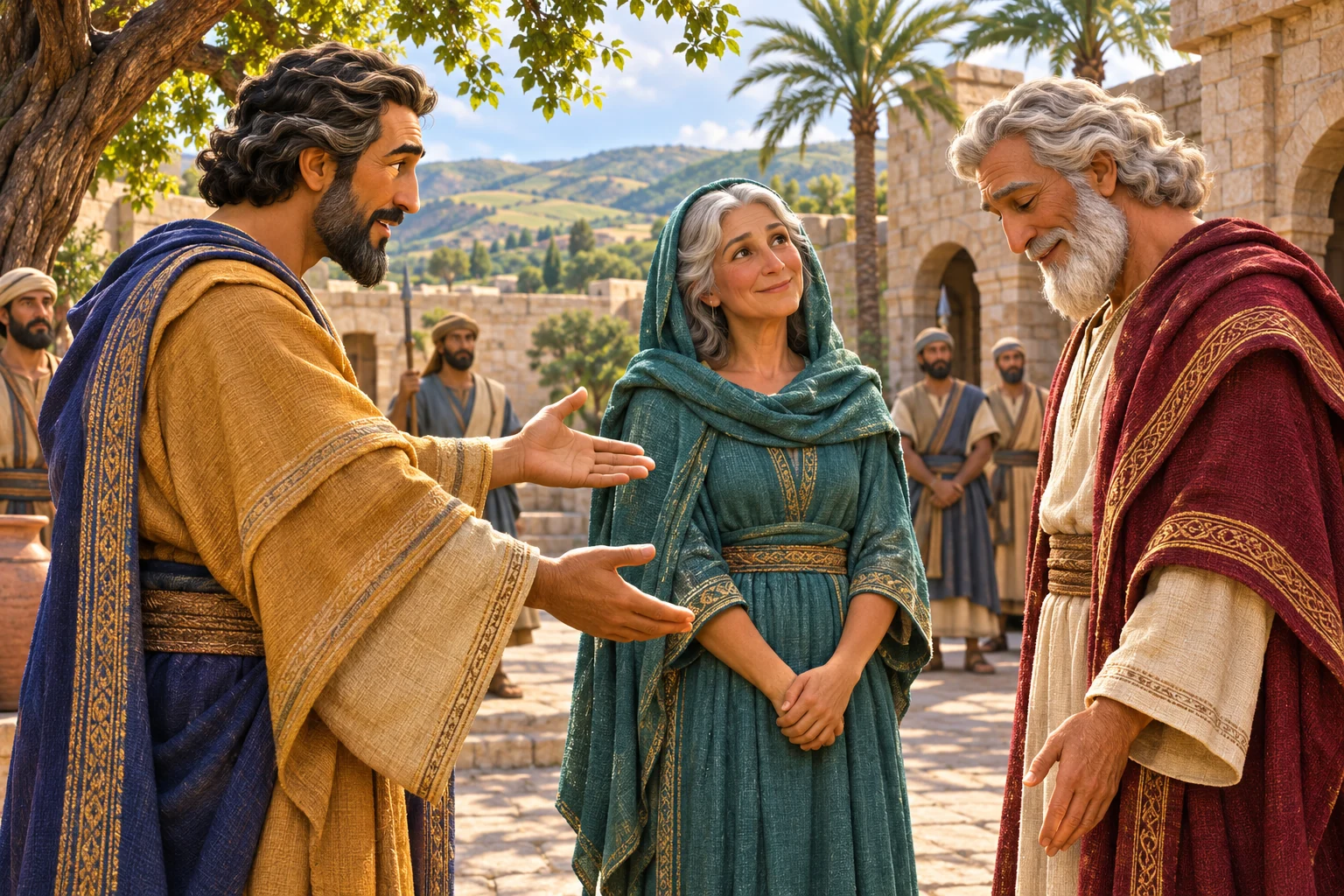
After the destruction of Sodom, Abraham traveled to Gerar. Once again, fear led him to call Sarah his sister without saying she was his wife. King Abimelech took Sarah into his household. God warned the king in a dream, and Sarah was returned safely. Abraham prayed for the household. Even Abraham still needed to learn to trust God. So Abraham prayed unto God: and God healed Abimelech, and his wife, and his maidservants; and they bare children.
Genesis 20:17 (KJV)At last, baby Isaac!
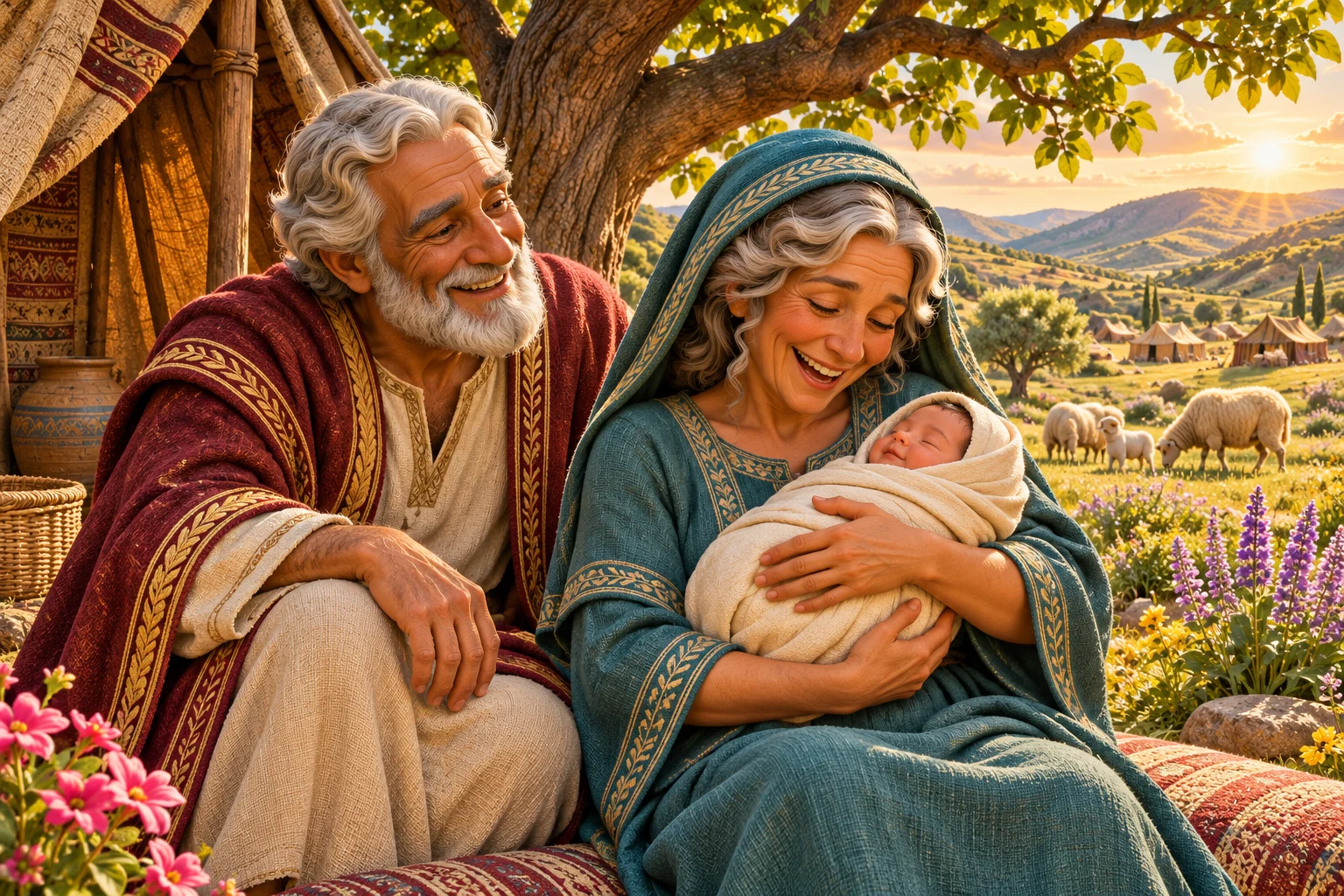
God kept His promise. Sarah gave birth to Isaac at the time God had said. Abraham was one hundred years old. Sarah, who had once laughed in disbelief, now spoke of joyful laughter. The long-awaited child was here. And Abraham called the name of his son that was born unto him, whom Sarah bare to him, Isaac.
Genesis 21:3 (KJV)God hears Ishmael
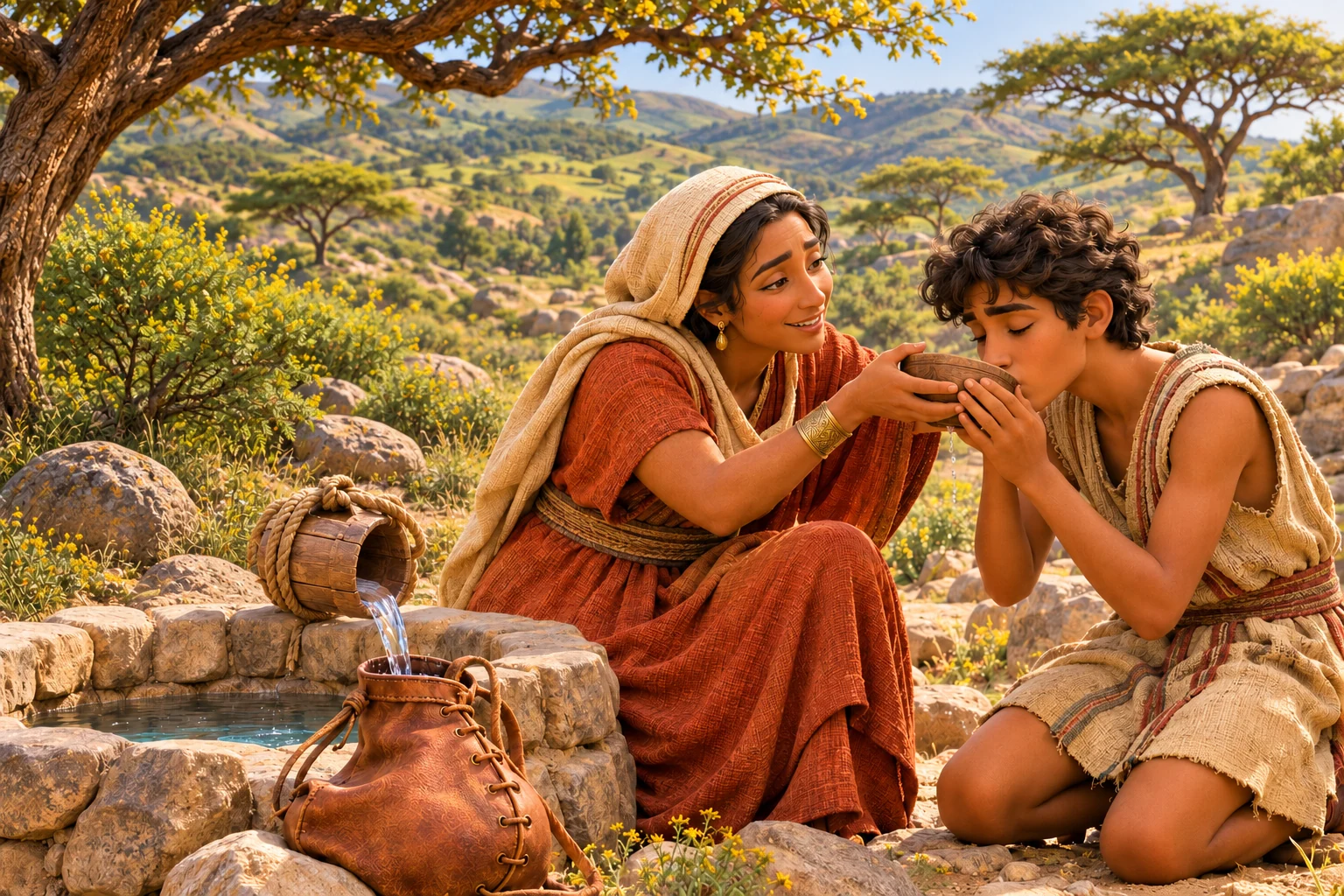
As Isaac grew, conflict troubled the family. Hagar and Ishmael left the household. In the wilderness their water ran out, and Hagar wept. God heard the boy and reassured his mother. God opened her eyes to a well. Ishmael survived, grew up in the wilderness, and became an archer. And God opened her eyes, and she saw a well of water; and she went, and filled the bottle with water, and gave the lad drink.
Genesis 21:19 (KJV)An agreement beside a well
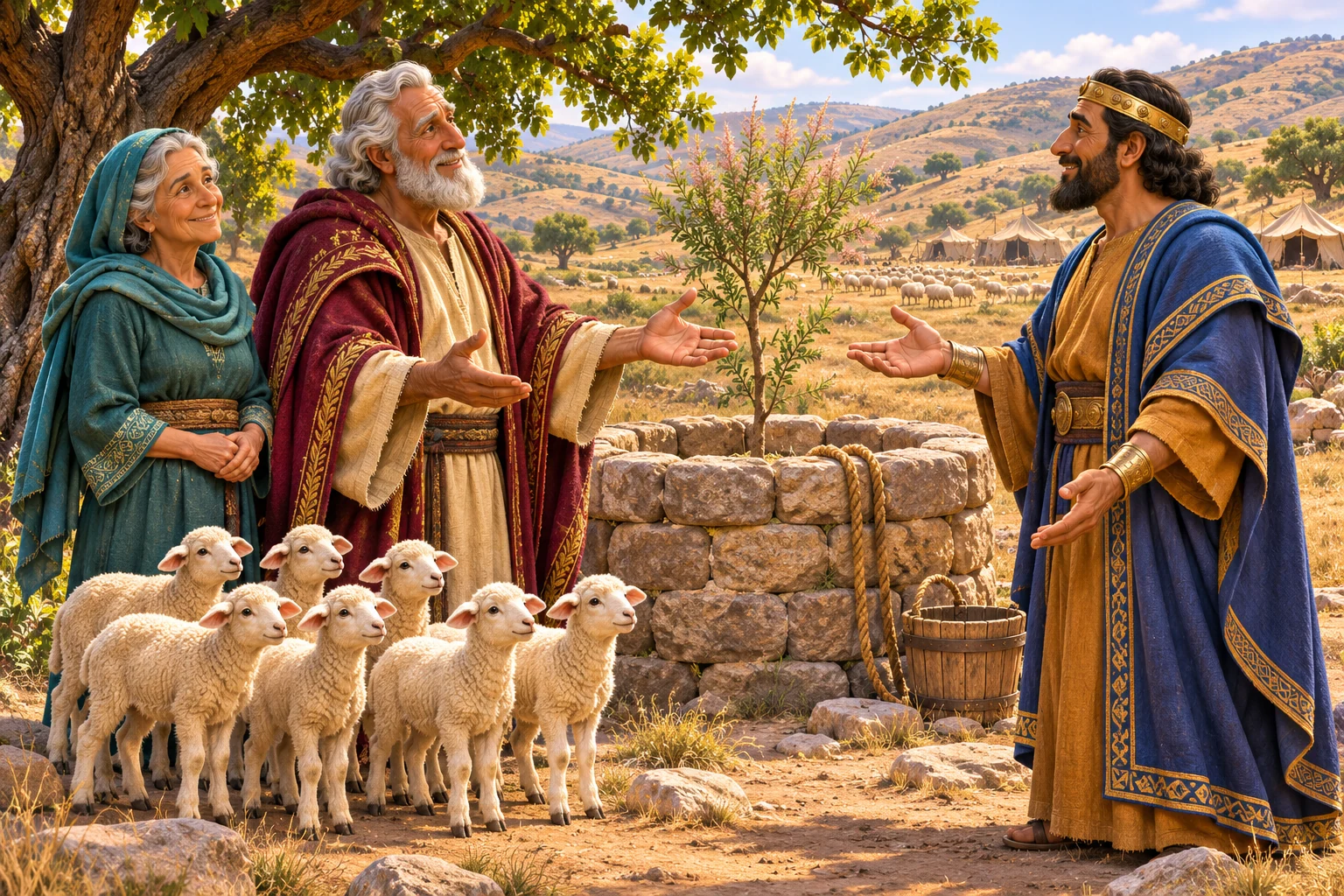
Abimelech recognized that God was with Abraham. The two men made an agreement to deal honestly with one another. Abraham also spoke about a well his servants had dug. Seven lambs were a witness that the well belonged to him. At Beersheba, Abraham planted a tamarisk tree and worshiped the everlasting God. Thus they made a covenant at Beersheba.
Genesis 21:32, excerpt (KJV)A difficult test of faith
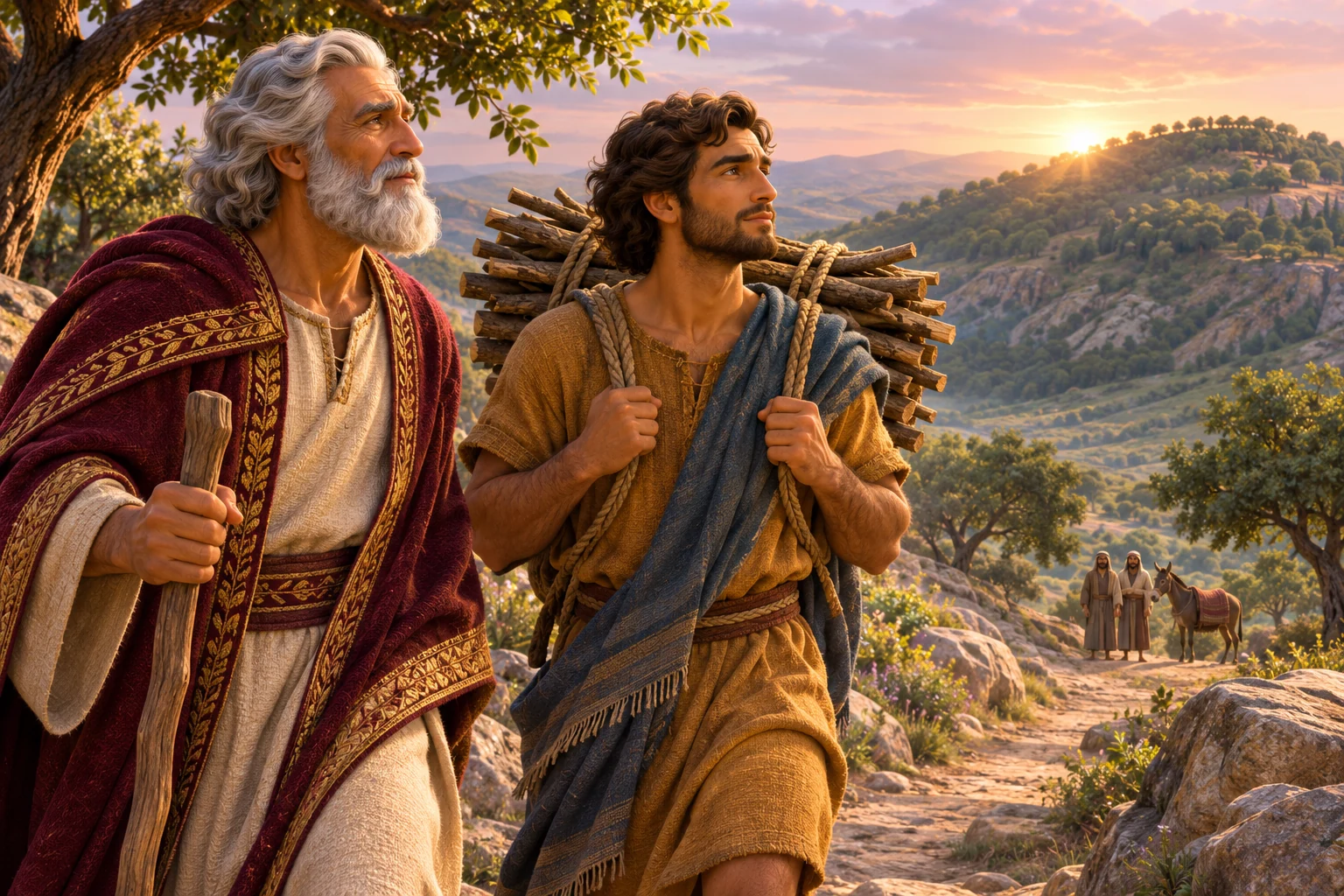
God tested Abraham by telling him to offer Isaac, the son he loved, in the land of Moriah. Abraham set out with Isaac, two servants, and a donkey. On the third day, father and son went on together. Isaac carried the wood and asked where the lamb was. Abraham said that God would provide. And Abraham said, My son, God will provide himself a lamb for a burnt offering: so they went both of them together.
Genesis 22:8 (KJV)God stops Abraham
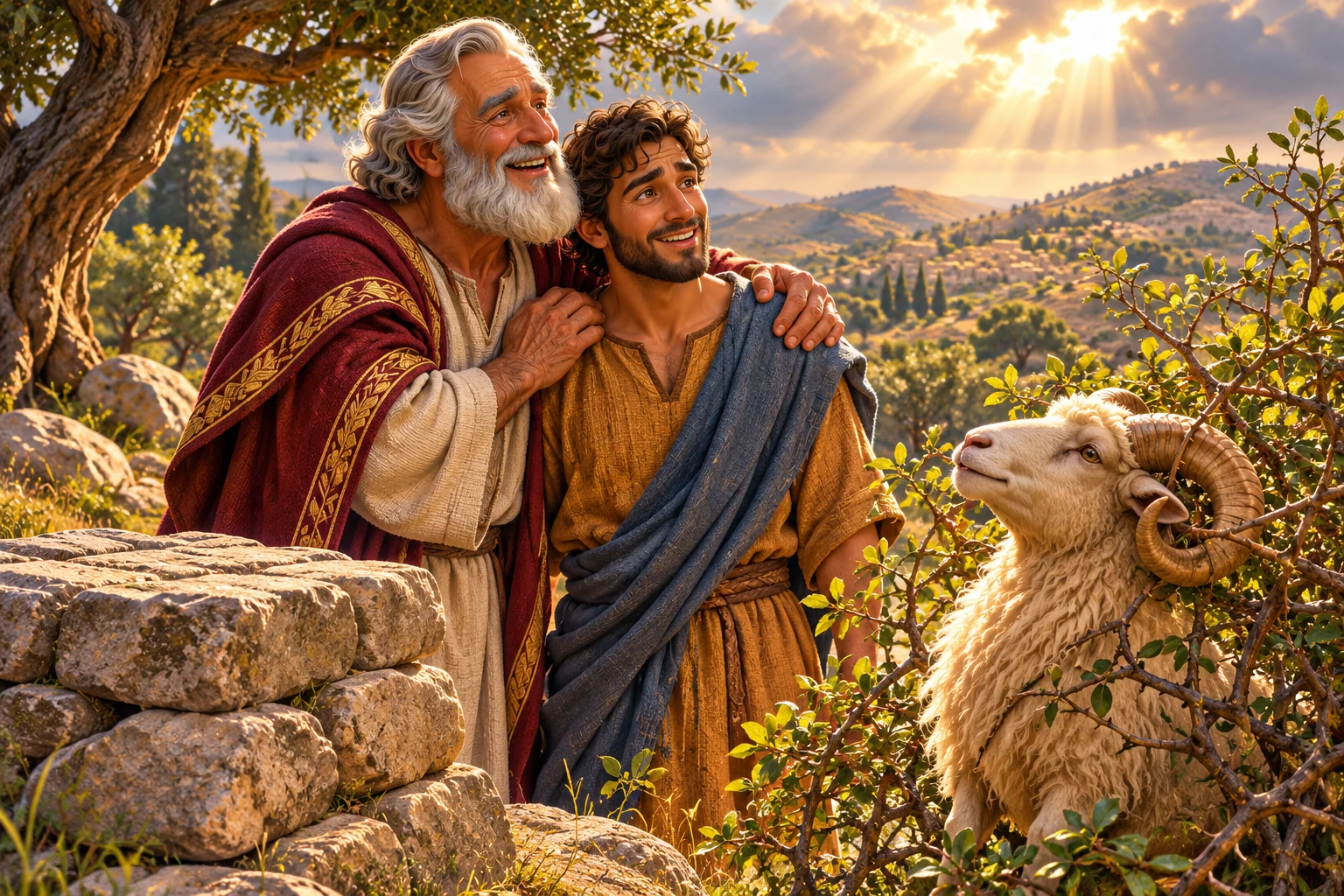
At the altar, Abraham prepared to offer Isaac. The angel of the Lord called from heaven and told him not to harm his son. Isaac was not killed. Abraham saw a ram caught by its horns in a thicket and offered it instead. He named the place Jehovah-jireh: the Lord will provide. God renewed His promise of blessing. Lay not thine hand upon the lad, neither do thou any thing unto him.
Genesis 22:12, excerpt (KJV)Ellen White adds
Ellen White describes Isaac as willingly sharing Abraham’s faith. She explains that the ram offered in Isaac’s place pointed forward to Jesus, who would give His life for us.
Patriarchs and Prophets · chapter 13 · pp. 152–154 · paraphrase
Remembering Sarah
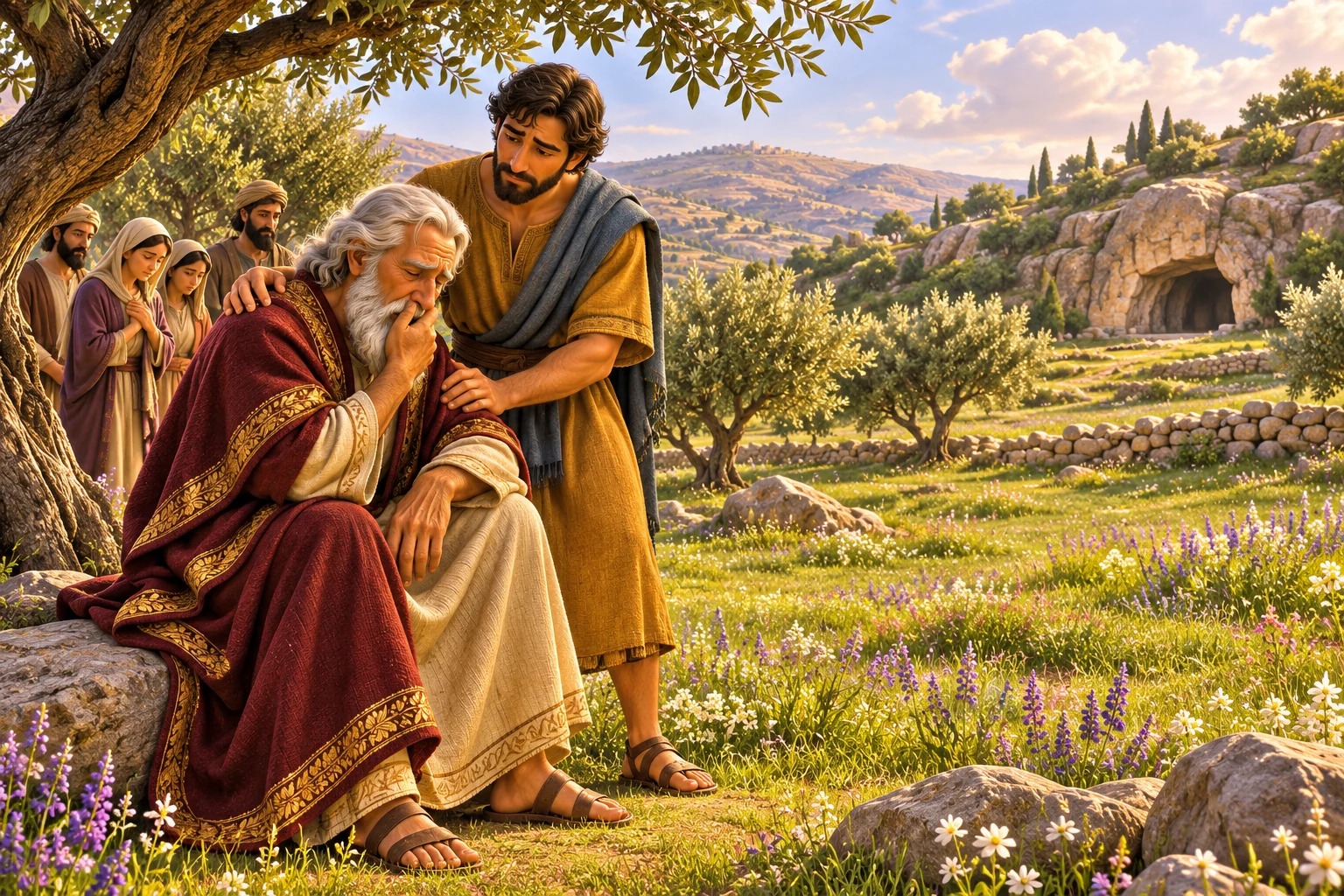
Sarah lived one hundred twenty-seven years. When she died at Hebron, Abraham mourned for her. He bought the field and cave of Machpelah from Ephron in the presence of witnesses. There he buried Sarah. Grief was part of this family’s story, even as they continued to hold on to God’s promise. And Sarah was an hundred and seven and twenty years old: these were the years of the life of Sarah.
Genesis 23:1 (KJV)Rebekah’s kindness at the well
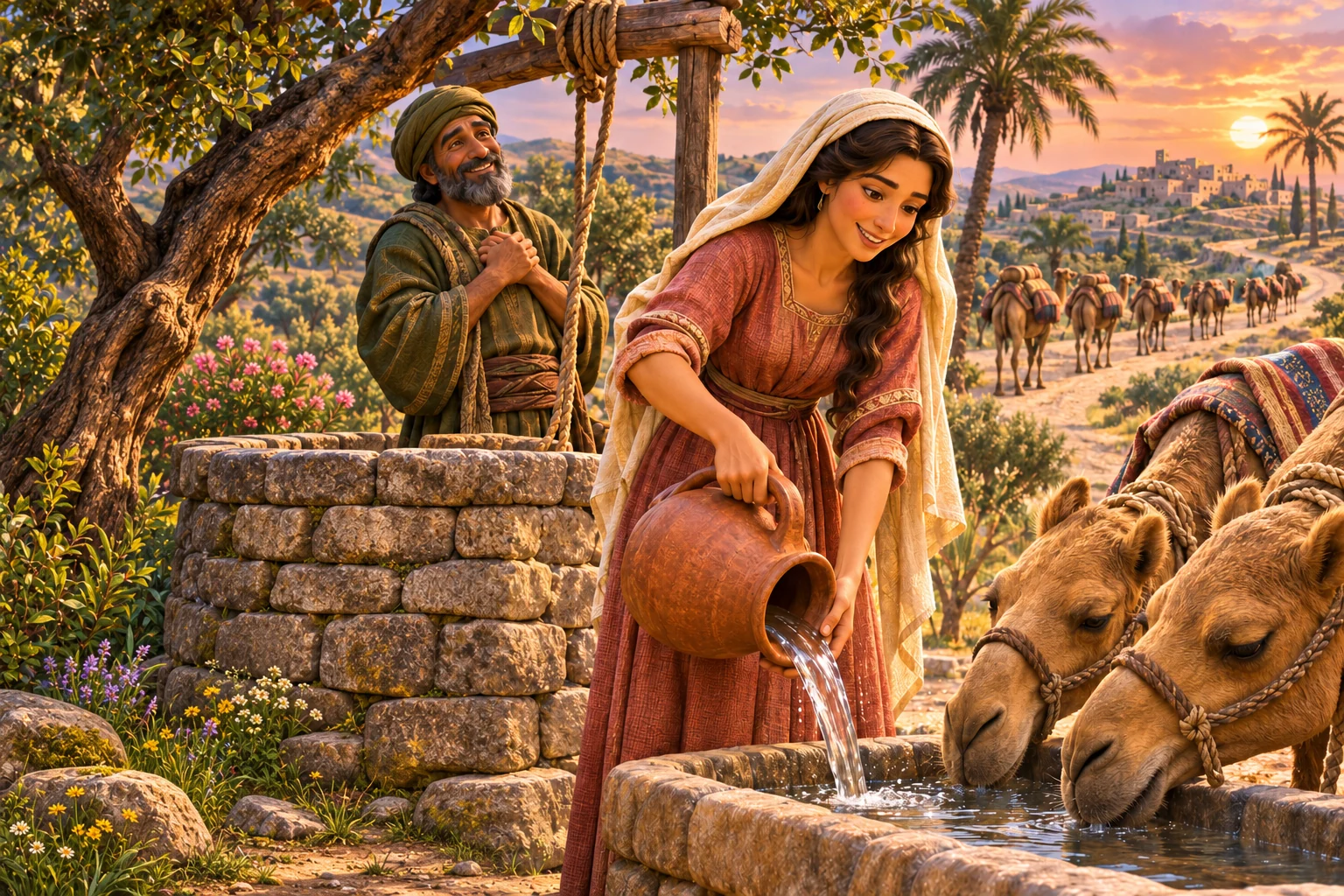
Abraham sent his trusted servant to his relatives to seek a wife for Isaac. At a well, the servant prayed for guidance. Rebekah gave him a drink and offered to water his camels too. Before he had finished praying, she had arrived. He thanked God for leading him to Abraham’s family. And when she had done giving him drink, she said, I will draw water for thy camels also, until they have done drinking.
Genesis 24:19 (KJV)Ellen White adds
Ellen White highlights Rebekah’s courtesy and willingness to serve. Her kindness helped the servant recognize an answer to his prayer.
Patriarchs and Prophets · chapter 15 · pp. 171–173 · paraphrase
Rebekah chooses to go
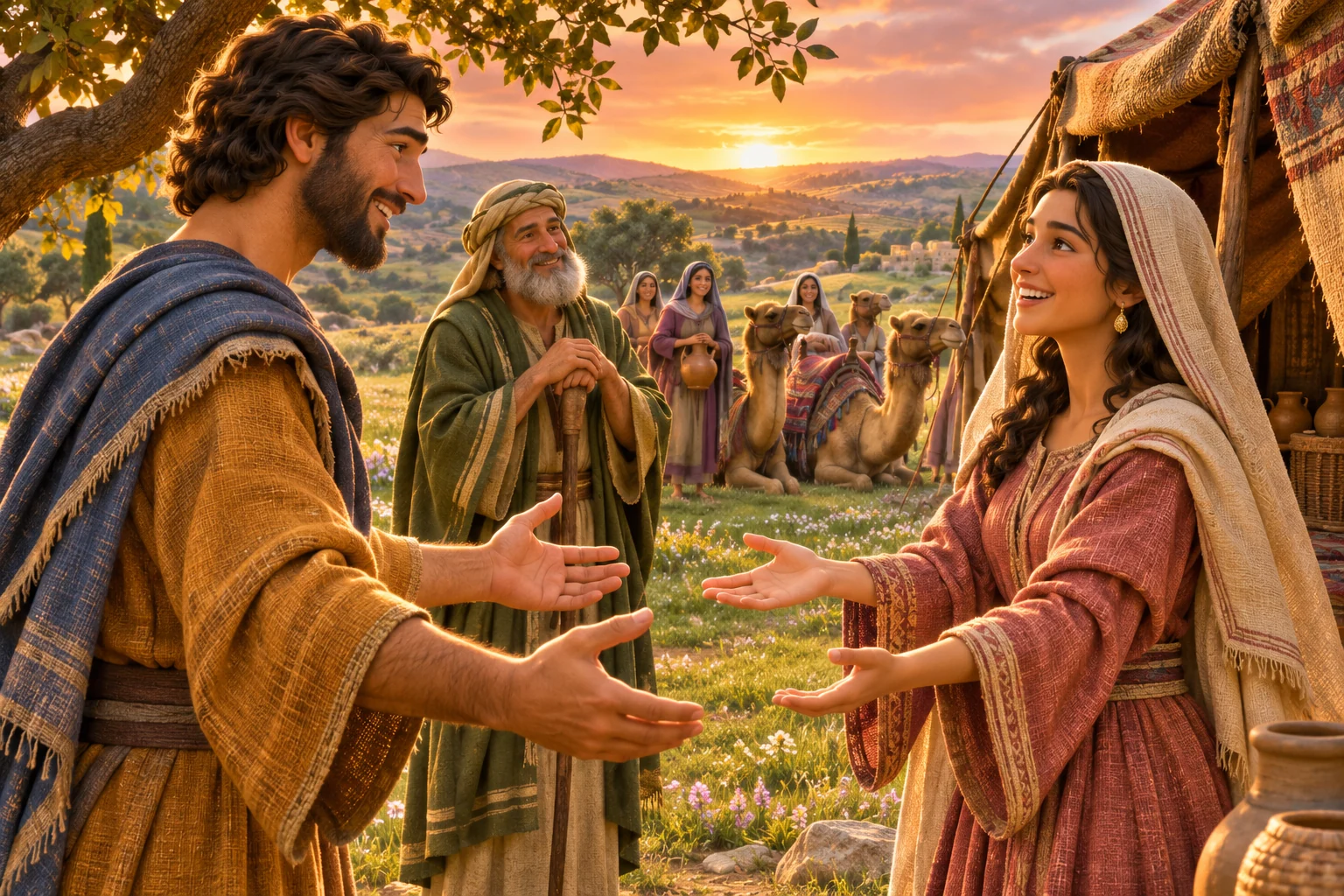
The servant told Rebekah’s family about his prayer and the purpose of his journey. They asked Rebekah whether she would go with him. She answered, “I will go.” Rebekah traveled with her nurse and attendants. Isaac met the arriving caravan. He and Rebekah married, and he loved her. And they called Rebekah, and said unto her, Wilt thou go with this man? And she said, I will go.
Genesis 24:58 (KJV)The promise continues
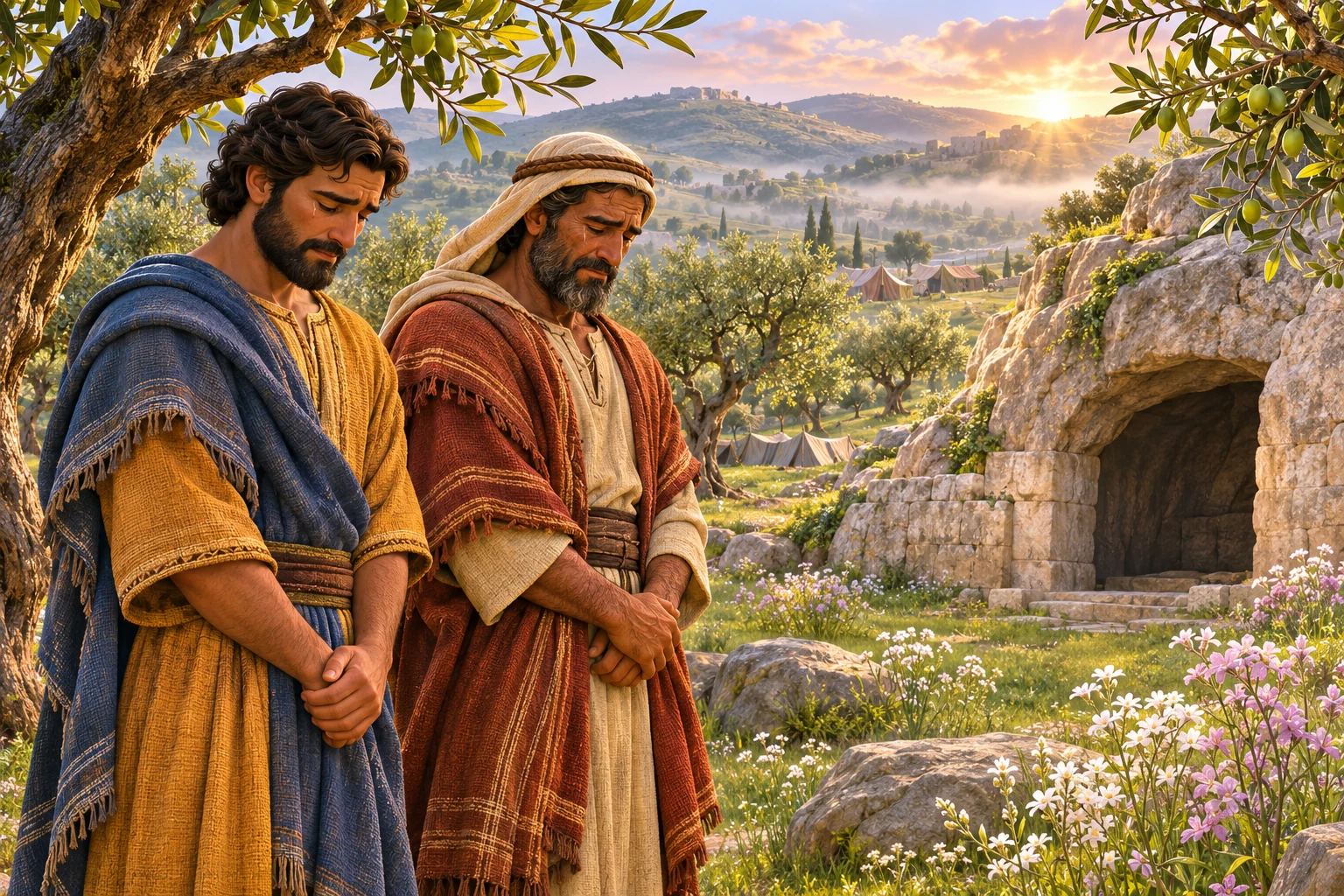
Abraham’s family grew, including children with Keturah. He gave gifts to his other sons and left his inheritance to Isaac. Abraham died at one hundred seventy-five years old. Isaac and Ishmael buried their father at Machpelah beside Sarah. God continued to bless Isaac. And it came to pass after the death of Abraham, that God blessed his son Isaac.
Genesis 25:11, excerpt (KJV)Two sons: Esau and Jacob
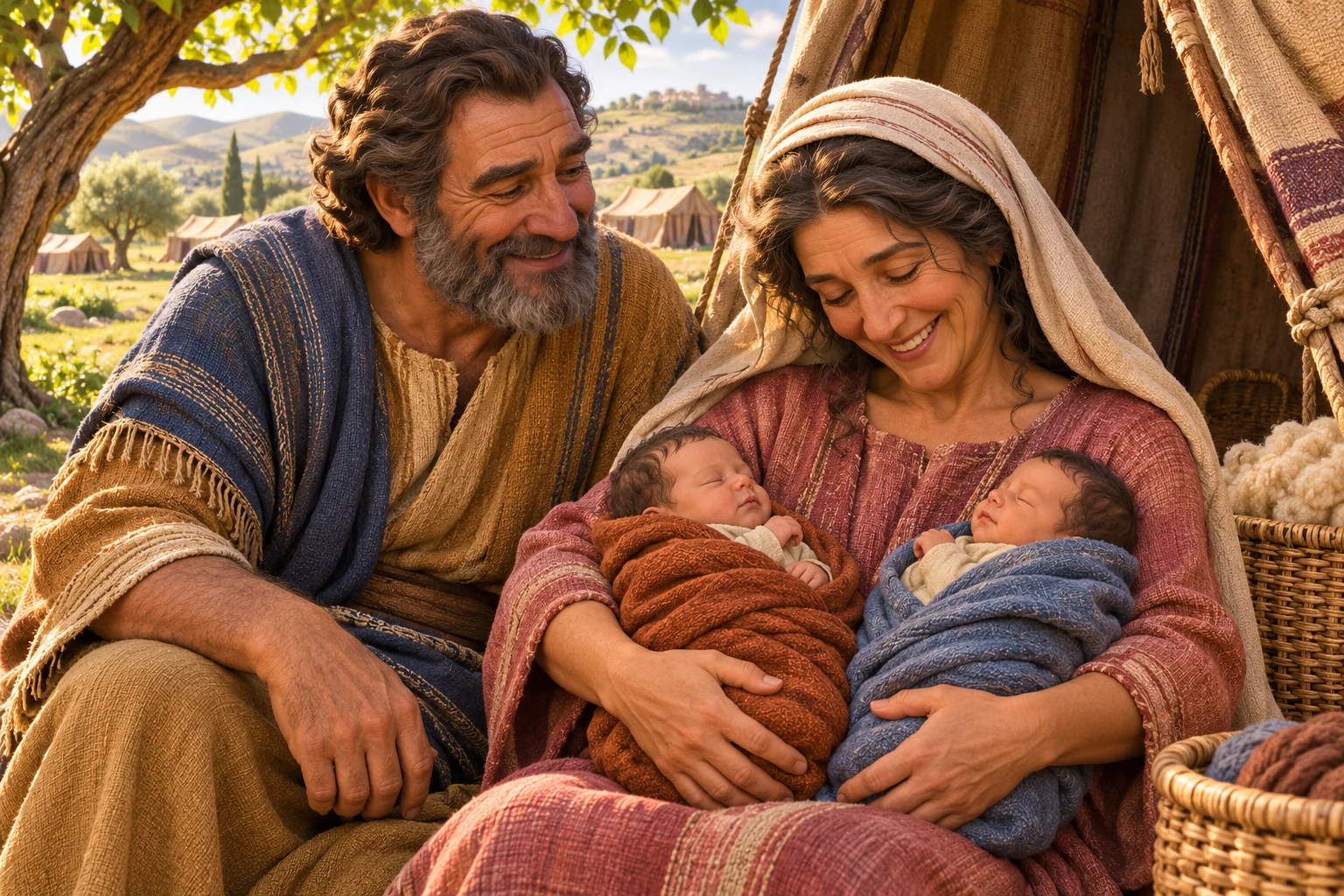
Genesis also tells us about Isaac and Rebekah’s children. Isaac prayed because Rebekah had no children. God answered. Rebekah learned that two nations would come from the twins she carried. Esau was born first, then Jacob, whose hand held Esau’s heel. Isaac was sixty years old when the twins were born. And Isaac intreated the LORD for his wife, because she was barren: and the LORD was intreated of him, and Rebekah his wife conceived.
Genesis 25:21 (KJV)A meal and a serious choice
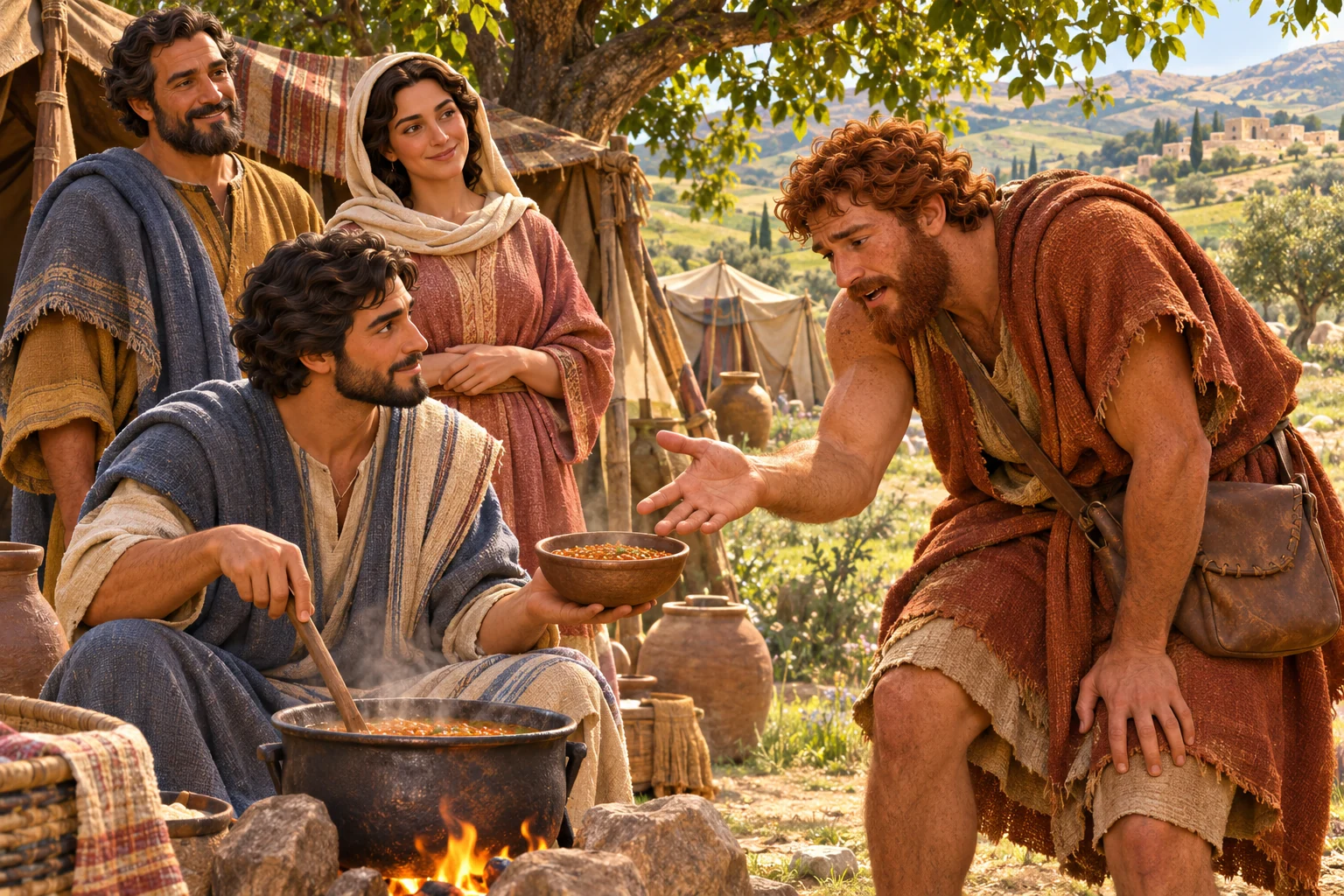
Esau enjoyed the open country and hunting. Jacob stayed among the tents. One day Esau returned hungry while Jacob was cooking lentil stew. Jacob asked for Esau’s birthright in exchange for food. Esau agreed. The birthright was a serious family inheritance, but Esau treated it as less important than his immediate hunger. And he sold his birthright unto Jacob.
Genesis 25:33, excerpt (KJV)Isaac learns to trust God
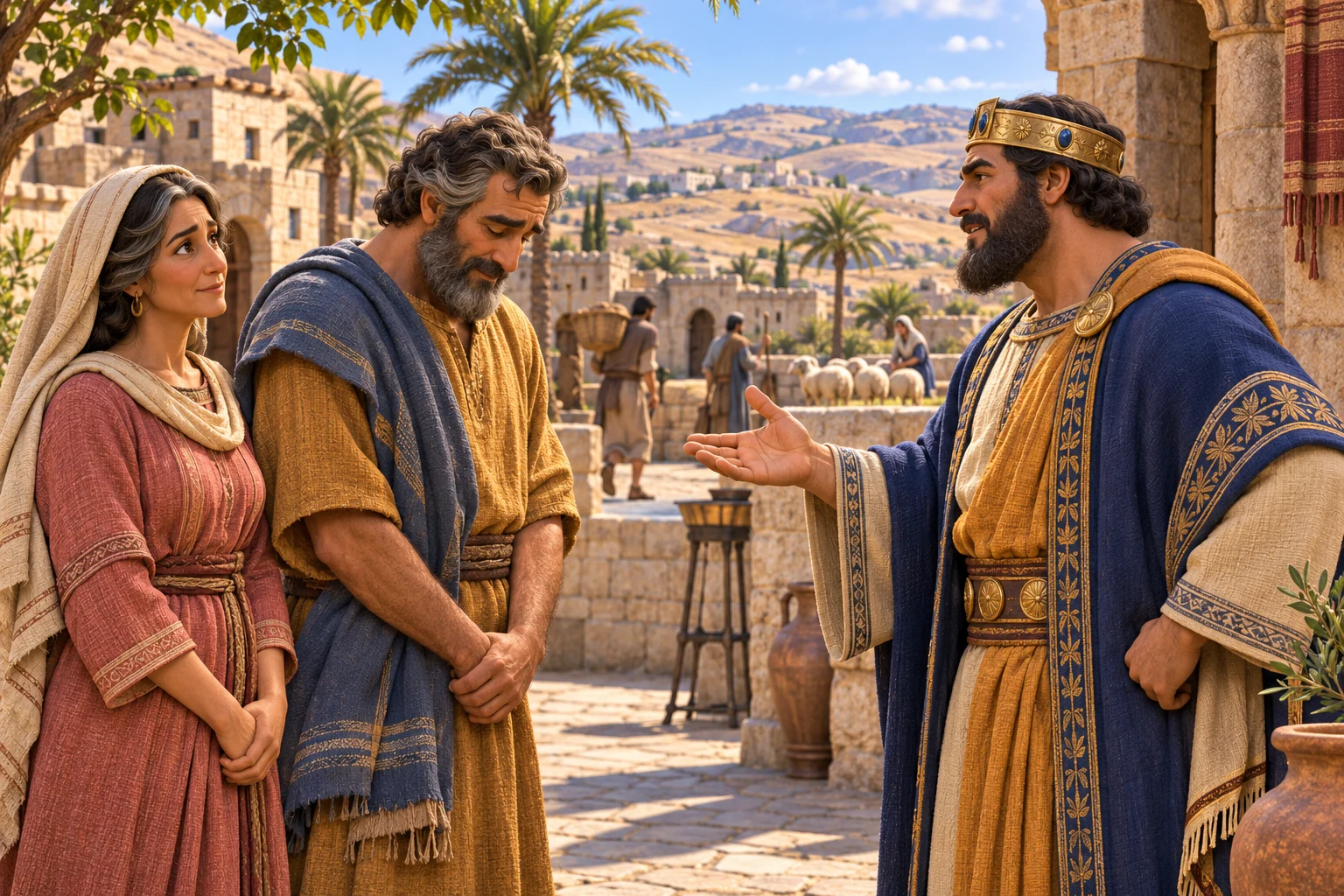
During a famine, God told Isaac to stay in the land rather than go to Egypt. God promised to be with him. In Gerar, Isaac feared for his life and called Rebekah his sister. When King Abimelech learned she was Isaac’s wife, he rebuked Isaac and ordered the people not to harm them. Isaac needed to trust God too. Sojourn in this land, and I will be with thee, and will bless thee.
Genesis 26:3, excerpt (KJV)Water, work, and arguments
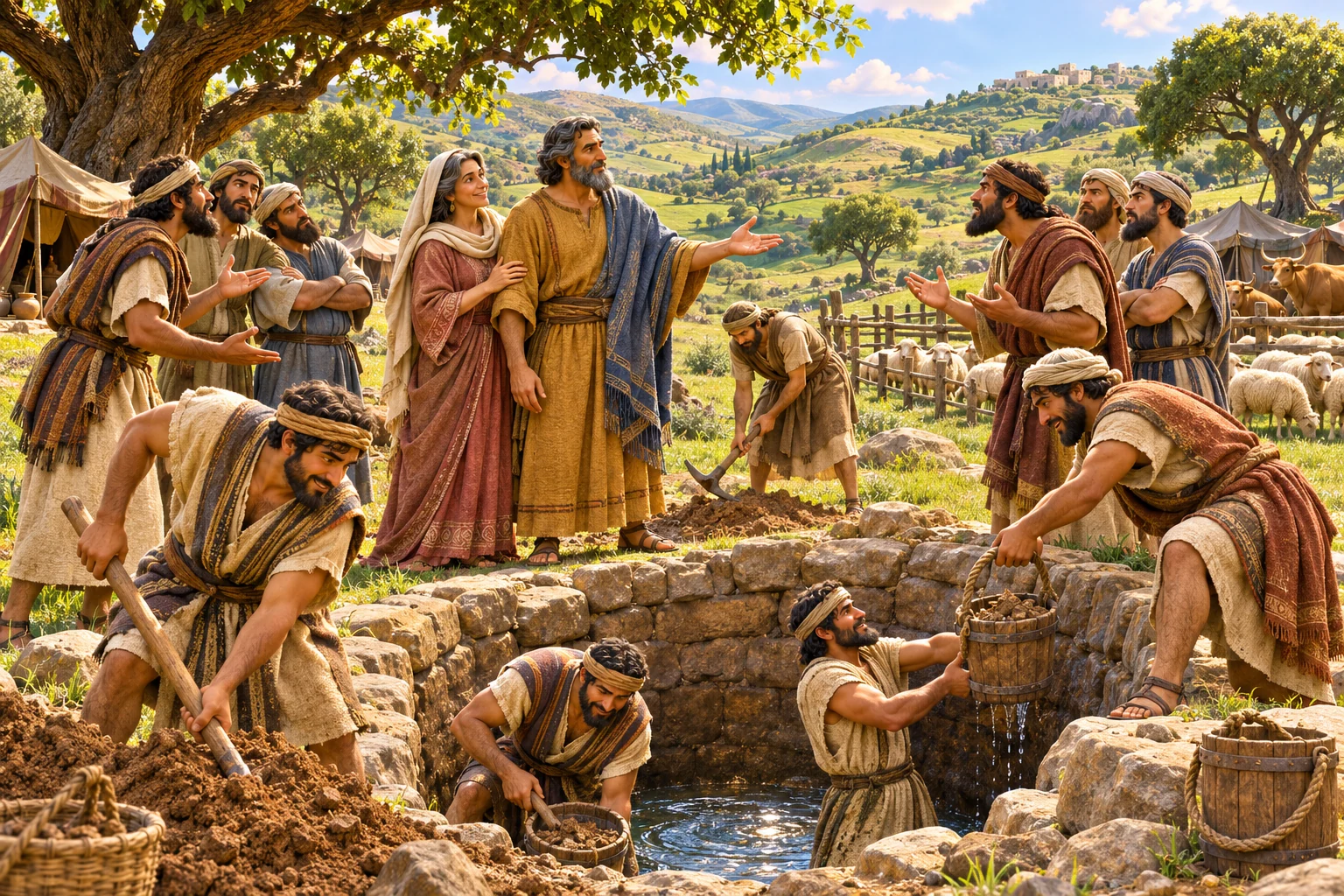
God blessed Isaac’s crops, flocks, and household. Other people became jealous. Wells dug in Abraham’s time had been filled with earth. Isaac moved to the valley and reopened them. His servants found fresh water, but local herdsmen argued over the wells named Esek and Sitnah. Isaac moved on instead of keeping up the quarrel. And Isaac digged again the wells of water, which they had digged in the days of Abraham his father.
Genesis 26:18, excerpt (KJV)Room to live in peace
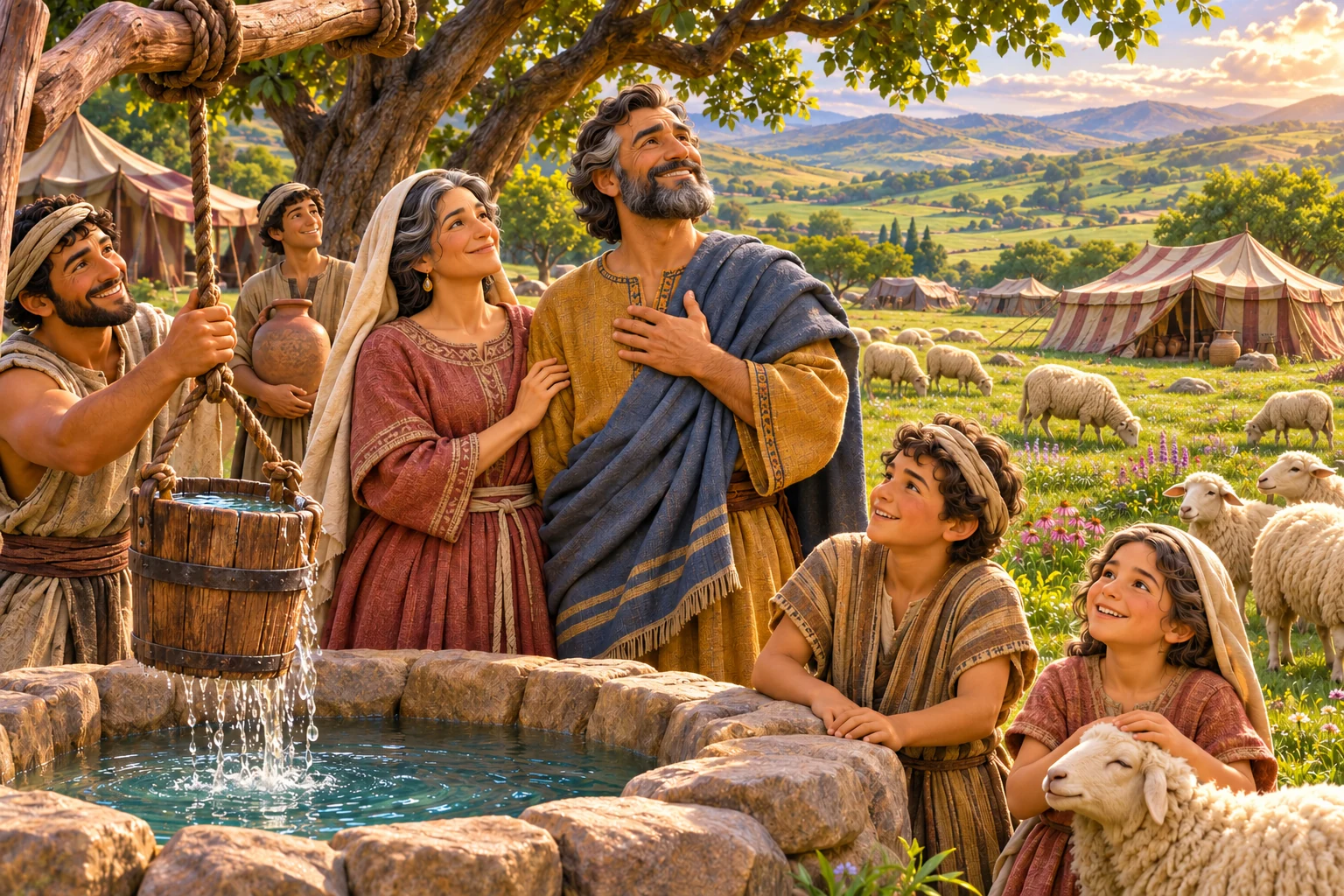
At another well there was no quarrel. Isaac named it Rehoboth, saying the Lord had made room for them. Later, at Beersheba, God reassured Isaac. Isaac built an altar and worshiped. Abimelech came to make a peaceful agreement. That same day the servants brought good news: they had found water! And Isaac sent them away, and they departed from him in peace.
Genesis 26:31, excerpt (KJV)
About this story
This illustrated retelling follows selected events in Genesis 20–26. Bible Adventures includes a story in every chapter of this section, KJV scripture, and separately labeled Ellen White insights from Patriarchs and Prophets, chapters 13 and 15. Little Explorers follows a shorter selection with simpler captions.
Pictures are imaginative illustrations of ancient life. They do not establish exact faces, clothing, ages, or locations. The Bible does not give Isaac’s age on the journey to Moriah; he is pictured as a young man. Jon’s recorded narration is available in both editions. Bible Adventures also has separate KJV scripture readings; Little Explorers has its own shorter recordings.
Read the preceding story: Abraham’s Journey